5 Lesser-Known Iconic Men of Egypt You Should Know
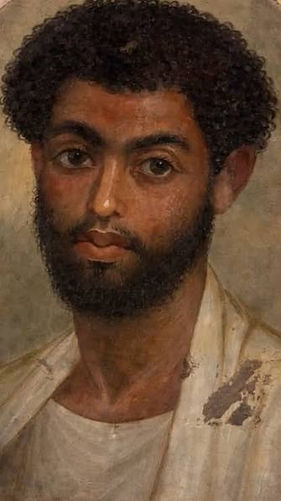
Ancient Egypt is often remembered through a familiar cast of names: Tutankhamun, Ramesses II, Akhenaten and etc. Their stories have filled museums, documentaries, textbooks, and popular culture for generations. But Egyptian history was never shaped by only its most famous figures. Behind the celebrated pharaohs and queens were men whose lives, achievements, and influence were just as remarkable, yet whose names rarely receive the same attention.
Some were powerful officials who controlled the administration of the kingdom. Others were architects, military leaders, priests, artists, or royal advisers whose work helped build and maintain one of the ancient world's greatest civilizations. Their achievements could determine the success of a reign, shape religious life, influence military campaigns, or leave an architectural legacy that survived for thousands of years.
This article explores five lesser-known but iconic men of ancient Egypt, figures who deserve to be remembered beyond the shadows of the most famous pharaohs. Their stories reveal another side of Egyptian history: one in which power did not always belong to the person sitting on the throne, and where some of the civilization's most fascinating achievements were created by people whose names have nearly disappeared from popular memory.
Content Table of lesser-known iconic men of Egypt
Jawhar al-Siqilli: The General Who Built Cairo
In 969 CE, an army entered Egypt under the command of a man whose name would eventually become inseparable from one of the world's greatest cities. His name was Jawhar al-Siqilli, a brilliant Fatimid general whose military career would carry him from the western Mediterranean to the Nile, and whose greatest achievement would not be a battlefield victory, but the foundation of Cairo.
Jawhar was born in Sicily, probably in the early tenth century, and came from a Christian family of Byzantine Greek background. He was brought into the Fatimid world as a slave, but his intelligence, discipline, and military abilities allowed him to rise through the ranks with extraordinary speed. He eventually became one of the most trusted commanders of al-Mu'izz li-Din Allah, the fourth Fatimid imam-caliph.
Under al-Mu'izz, Jawhar first played a major role in the Fatimid expansion across North Africa. Then came the campaign that would change Egyptian history forever.
In 969 CE, Jawhar led the Fatimid conquest of Egypt. The country was then ruled by the weakening Ikhshidid dynasty, and the Fatimids succeeded in taking control with comparatively little prolonged resistance. Jawhar entered Fustat, the major Egyptian city of the time, and began preparing the country for its new Fatimid rulers.
But Jawhar was thinking beyond conquest.
Rather than simply occupying the existing city, he established a new royal settlement to the north of Fustat. Its original name was al-Qāhirah, meaning "The Victorious", the city that would become Cairo.
The new city was designed as the administrative and royal center of the Fatimid state. Its walls enclosed palaces, government buildings, and religious institutions, transforming the landscape of Egypt's capital. What began as a military and political foundation would eventually grow into one of the most influential cities in the Islamic world.
Jawhar's achievements did not stop at the city's walls. In 970 CE, construction began on Al-Azhar Mosque, established under Fatimid patronage. It would eventually become one of the world's most important centers of Islamic learning.
Jawhar therefore left Egypt with something far more lasting than a military victory. He created the foundations of a city that would survive dynasties, invasions, political revolutions, and centuries of change.
He died on 28 April 992 CE, more than two decades after his conquest of Egypt. By then, the city he founded had already begun developing into something far greater than a military settlement.
Today, millions of people live in Cairo, one of the world's great historic capitals. Every crowded street, ancient mosque, marketplace, and monument belongs to a city whose story began with a Fatimid commander arriving on the banks of the Nile.
Jawhar conquered Egypt with an army.
But his greatest victory was Cairo!
Anwar Sadat: The President Who Changed Egypt's Place in the World
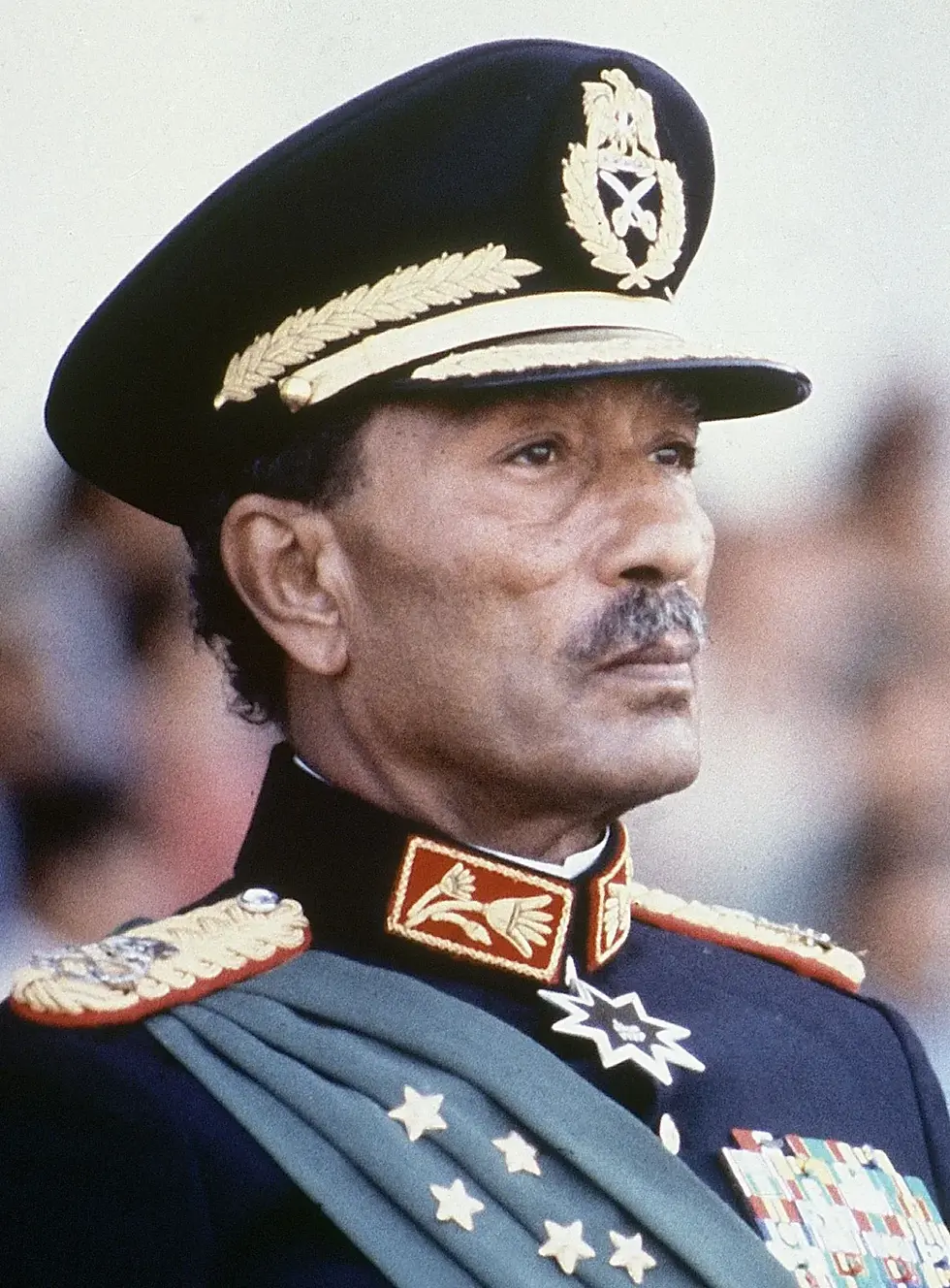
When Anwar Sadat became president of Egypt in 1970, few could have predicted how dramatically he would change the country's future, or how controversial that transformation would become.
Born on 25 December 1918 in Mit Abu al-Kum, Sadat grew up during a period when Egypt was still deeply affected by British influence and political struggle. As a young man, he became involved in the movement seeking Egyptian independence and was eventually drawn into military and political life.
His career changed dramatically in the years that followed the Egyptian Revolution of 1952. Sadat became one of the prominent figures of the new republican government and eventually served as vice president under Gamal Abdel Nasser.
When Nasser died unexpectedly in September 1970, Sadat succeeded him as president.
At first, many observers underestimated him.
Sadat soon demonstrated that he intended to follow his own path. He moved away from some of Nasser's domestic and foreign policies, reshaped Egypt's economy, and most importantly, sought to change the country's relationship with Israel and the wider Middle East.
In 1973, Egypt launched a surprise attack across the Suez Canal during the October War, seeking to recover territory lost to Israel during the 1967 conflict. The war did not simply produce a straightforward military victory, but it dramatically changed the diplomatic landscape. Sadat increasingly recognized that Egypt's future could not be secured through warfare alone.
He chose negotiation.
That decision eventually brought him to an extraordinary moment in modern history.
In 1977, Sadat became the first Arab leader to officially visit Israel. The image of the Egyptian president standing before the Israeli parliament was extraordinary at the time. For decades, Egypt and Israel had been enemies, and the possibility of direct peace seemed almost unimaginable.
Negotiations followed, culminating in the Camp David Accords in 1978 and the Egypt–Israel Peace Treaty of 1979. For his role in the peace process, Sadat shared the Nobel Peace Prize with Israeli Prime Minister Menachem Begin.
The decision made him internationally celebrated, but deeply controversial at home and across parts of the Arab world. His policies created powerful opponents, while domestic political and economic tensions continued to grow.
On 6 October 1981, while attending a military parade commemorating the October War, Sadat was assassinated by members of an extremist group within the Egyptian military.
He had served as Egypt's president for eleven years.
Sadat's legacy remains complicated. He was neither simply a peacemaker nor simply a controversial politician. He was a leader who took enormous political risks, changed Egypt's international position, and made a decision that permanently altered the politics of the Middle East.
His story is ultimately one of transformation: a soldier who became a president, an enemy who pursued peace, and a leader whose attempt to reshape Egypt's future ultimately cost him his life.
Narmer: The King at the Beginning of Dynastic Egypt
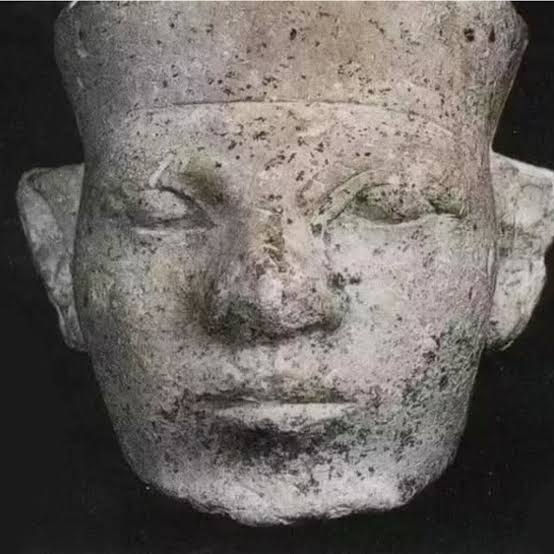
Long before the pyramids of Giza dominated the horizon, before the great temples of Karnak and Luxor, and centuries before the famous pharaohs whose names fill modern history books, a ruler stood at the beginning of Egypt's dynastic story.
His name was Narmer.
Narmer lived around the end of the fourth millennium BCE, during the transition into what historians call the Early Dynastic Period. He is one of the earliest Egyptian rulers for whom we possess substantial archaeological evidence, and he is traditionally associated with the political unification of Upper and Lower Egypt.
The most famous evidence connected with him is the Narmer Palette, a ceremonial stone palette discovered at Hierakonpolis. On its surfaces, Narmer appears wearing the crowns associated with Upper and Lower Egypt, alongside powerful images of conquest and royal authority.
The symbolism is striking!
The king appears larger than the figures around him, demonstrating the visual language Egyptian artists would use for thousands of years afterward. Enemies lie defeated beneath his power, while divine imagery surrounds the king and reinforces his authority.
The palette has traditionally been interpreted as representing the unification of Egypt under Narmer, a moment when the lands of the Nile Valley were brought together under a single ruler. The reality was probably more complicated. Political unification was likely a long process rather than one dramatic battle followed by immediate national unity. Nevertheless, Narmer represents an important stage in the formation of the Egyptian state.
And then comes the mystery of Menes.
Ancient Egyptian and classical sources name a ruler called Menes as the founder of the First Dynasty and the unifier of Egypt. For centuries, historians have debated whether Menes and Narmer were actually the same person. Some evidence and historical traditions support the identification, while other interpretations have proposed that Menes may have been another early king, possibly Hor-Aha, Narmer's successor.
Therefore, Narmer and Menes should not simply be treated as unquestionably identical. What we can say with much greater confidence is that Narmer was a major early ruler associated with the formation of unified dynastic Egypt, while Menes became the legendary founding king in later historical traditions.
His importance reaches far beyond his own reign.
The centralized kingdom that emerged during this period would develop into one of the longest-lasting civilizations in human history. The institutions of kingship, royal symbolism, writing, administration, and religious tradition that developed during Egypt's earliest dynasties would provide foundations for the pharaohs who followed.
Thousands of years later, people remember the pyramids and the golden treasures of later kings. But before those monuments could exist, Egypt first needed a unified state.
Narmer belongs to that beginning.
He was not the builder of the Great Pyramid, nor the conqueror of a vast empire. He was something more fundamental: one of the kings standing at the threshold of dynastic Egypt itself.
Omar Sharif: The Egyptian Who Became a Global Star
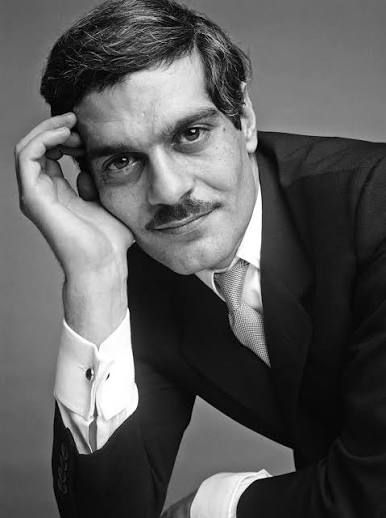
Long before Egyptian cinema became internationally recognized, one Egyptian actor managed to cross a cultural barrier that few performers from the Arab world had crossed before him. His name was Omar Sharif, and his face would eventually become familiar to audiences from Cairo to Hollywood.
Born Michel Dimitri Shalhoub on 10 April 1932 in Alexandria, Sharif grew up in an Egyptian Christian family of Lebanese-Syrian heritage. He initially studied mathematics and physics at Victoria College in Alexandria before joining his family's timber business. Acting was not originally supposed to become his life's defining career.
Then cinema intervened.
In the 1950s, Sharif entered Egyptian filmmaking and quickly became one of the country's most recognizable actors. His breakthrough came with Youssef Chahine's The Blazing Sun (Sira' Fi al-Wadi) in 1954, where he starred opposite the Egyptian actress Faten Hamama. Their partnership became one of the most celebrated relationships in Egyptian cinema, both on and off screen, and Sharif converted to Islam before marrying Hamama in 1955.
But Egypt was only the beginning.
Sharif's international breakthrough arrived when British filmmaker David Lean cast him in Lawrence of Arabia in 1962. He played Sherif Ali, a role that introduced him to enormous international audiences and earned him an Academy Award nomination for Best Supporting Actor.
Suddenly, the Egyptian actor from Alexandria was working alongside some of the biggest names in world cinema.
David Lean cast him again, this time in the title role of Doctor Zhivago (1965). The film became an enormous international success, and Sharif transformed into one of the most recognizable actors of his generation. He continued working in international cinema, appearing in films such as The Fall of the Roman Empire, Funny Girl, and Mackenna's Gold, while also returning periodically to Egyptian productions.
Yet Sharif's international career came with a complicated reality. Hollywood often placed him in roles defined by exoticism and foreignness, reflecting the limited opportunities available to actors from the Middle East at the time. Even so, he managed something extraordinary: he became an international star without abandoning his connection to Egyptian cinema.
Away from acting, Sharif was also famous for his passion for bridge. He became an internationally respected competitive bridge player and wrote about the game, demonstrating that his interests extended far beyond the screen.
His later years were quieter. He suffered from declining health and died on 10 July 2015 in Cairo at the age of 83 after a heart attack.
Omar Sharif's legacy reaches beyond the films that made him famous. He was one of the first Egyptian actors to become a genuine international star, carrying a piece of Egyptian cinema onto the world's biggest stages.
From Alexandria to Hollywood, his career proved that an actor did not have to be born in London, Paris, or Los Angeles to become a global cinematic icon.
Sometimes, the world simply had to discover Cairo's own star.
Maimonides: The Philosopher Who Found a Home in Cairo
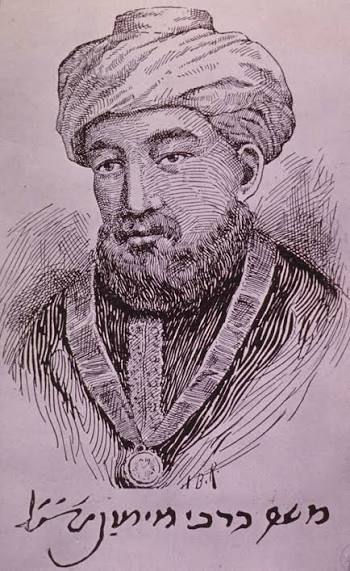
In the medieval world, Cairo was not simply a political capital. It was a meeting place of religions, languages, sciences, and ideas. Among the remarkable intellectuals who lived there was Moses ben Maimon, better known as Maimonides, one of the most influential Jewish thinkers of the Middle Ages.
Born around 1138 in Córdoba, in Muslim-ruled al-Andalus, Maimonides grew up in a family deeply involved in Jewish scholarship. His early life was disrupted by political and religious upheaval, forcing his family to leave Córdoba and eventually settle in Egypt.
By the late 1160s, Maimonides had established himself in Fustat, the old city beside Cairo. There, he became a physician, scholar, philosopher, and one of the most important Jewish legal authorities of his age.
His life in Egypt placed him at the center of a remarkably diverse intellectual environment. Muslim, Jewish, and Christian scholars lived and worked across the region, while Cairo itself had become one of the great centers of medieval learning.
Maimonides' reputation as a physician grew quickly. He eventually became associated with the court of Saladin, the famous Muslim ruler who conquered Jerusalem in 1187. Later Jewish and historical traditions describe Maimonides as serving as a physician to Saladin's household and court. The exact details of his day-to-day role remain less certain than the broader tradition, but his position as a prominent physician in the Egyptian elite is well established.
Medicine, however, was only one part of his enormous intellectual legacy.
Maimonides wrote extensively on Jewish law, philosophy, medicine, astronomy, and theology. His Mishneh Torah became one of the most important systematic works of Jewish law, while The Guide for the Perplexed explored the difficult relationship between reason, philosophy, and religious belief.
His approach was remarkable for its intellectual ambition. He believed that religious understanding could benefit from rational investigation and philosophical thought. For him, faith and reason did not have to exist as enemies.
He also produced medical writings that circulated widely beyond Jewish communities, reflecting the broader intellectual exchange of the medieval Islamic world.
Maimonides spent the final decades of his life in Egypt and died in Fustat on 12 December 1204. He was buried in Tiberias, in the region of Galilee.
Centuries later, his name remains inseparable from medieval Jewish philosophy. But his story is also part of Egyptian history. Cairo provided the environment in which a displaced scholar from Córdoba became one of the most influential thinkers of the medieval world.
He arrived in Egypt as a refugee from political upheaval.
He left behind a legacy that crossed religion, medicine, philosophy, and geography.
Maimonides' story is a reminder that the history of Egypt has never belonged to a single culture or period. Its cities have repeatedly become places where people, ideas, and traditions meet, and sometimes, from that meeting, produce extraordinary intellectual legacies.
Project Kemet
by The Museum of Time
30 July 2026


Comments