Charlotte Brontë Biography: Life, Works, and Literary Legacy of the Author of Jane Eyre

Charlotte Brontë is remembered as one of the defining voices of nineteenth-century English literature, yet behind the celebrated author of Jane Eyre was a woman whose own life was marked by hardship, resilience, and quiet determination. Living in an era when women were often expected to remain within the domestic sphere, Brontë transformed her personal experiences into stories that challenged social conventions and gave readers heroines with uncommon intelligence, independence, and emotional depth.
Raised in the isolated village of Haworth on the windswept Yorkshire moors, Charlotte grew up surrounded by both imagination and loss. The deaths of close family members, the companionship of her gifted siblings, and the limitations placed upon women of her time profoundly shaped her outlook on life and, ultimately, her writing. Rather than allowing adversity to silence her, she turned it into art, creating novels that continue to resonate with readers nearly two centuries later.
This biography explores Charlotte Brontë beyond the pages of her famous novels. It follows her journey from a curious child with an extraordinary imagination to a pioneering novelist whose influence reached far beyond Victorian England. Along the way, we discover not only the milestones of her literary career but also the relationships, beliefs, and personal struggles that shaped the woman behind some of literature's most enduring works.
Content Table
Who Was Charlotte Brontë?
Charlotte Brontë was an English novelist, poet, and one of the most influential literary figures of the Victorian era. Best known for her groundbreaking novel Jane Eyre (1847), she challenged the conventions of nineteenth-century fiction by creating complex female protagonists with independent minds, moral conviction, and emotional depth. Writing under the pen name Currer Bell, Charlotte became one of the first women to earn lasting recognition in a literary world largely dominated by men.
Yet Charlotte Brontë's life extended far beyond her literary achievements. Born on April 21, 1816, in Thornton, Yorkshire, she experienced profound loss from an early age, including the deaths of her mother and several siblings. These hardships, combined with her education, work as a governess, and the quiet isolation of the Yorkshire moors, deeply influenced both her worldview and her writing.
Although she published only four completed novels during her lifetime, Charlotte's works left a lasting mark on English literature. Her stories explored themes of identity, love, social inequality, faith, and personal freedom with remarkable psychological insight. Today, she is remembered not only as the author of Jane Eyre but also as a woman whose courage, imagination, and determination helped redefine what women could write, and who they could become.
Family Background and Early Life
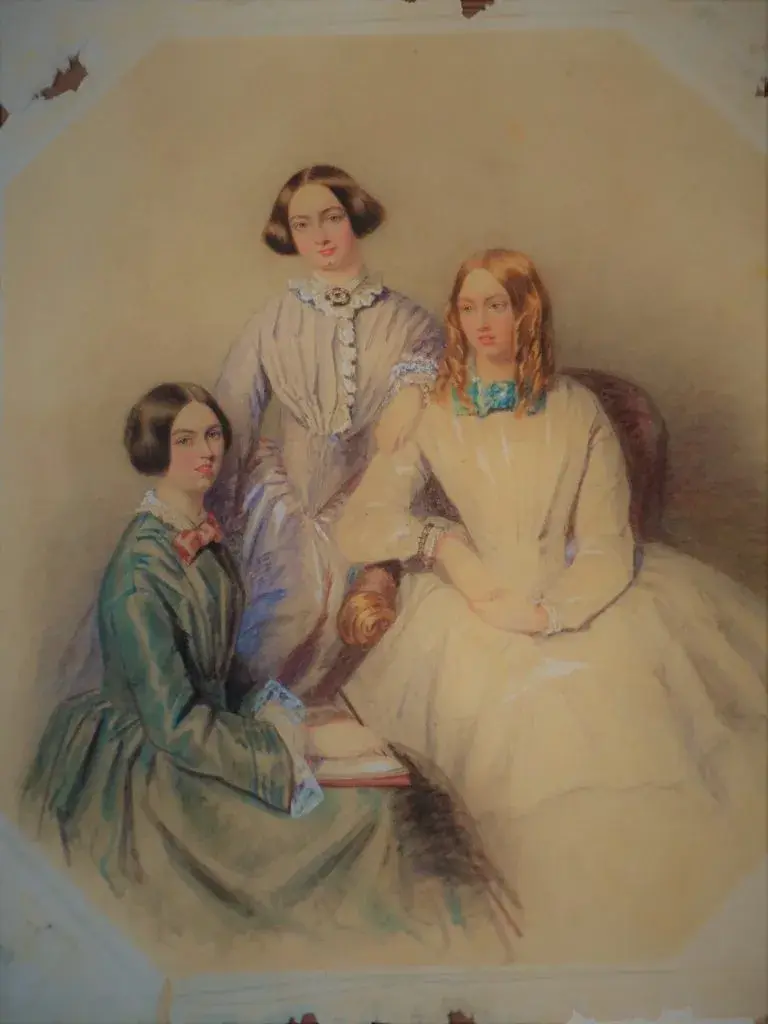
Charlotte Brontë was born on 21 April 1816 in the village of Thornton, Yorkshire, England, the third of six children born to Patrick Brontë, an Irish-born Anglican clergyman, and Maria Branwell Brontë, a well-educated former schoolteacher from Cornwall. Patrick had risen from a modest farming family through education and determination, eventually graduating from the University of Cambridge before entering the Church. A thoughtful and intellectually curious man, he encouraged his children to read widely and think independently. Maria, meanwhile, was known for her gentle nature and strong moral character. Although her life was tragically short, her appreciation for learning and education helped shape the values of the Brontë household.
In 1820, when Charlotte was four years old, the family moved to the parsonage in Haworth, a quiet village surrounded by the rugged Yorkshire moors. The isolated landscape would become inseparable from Charlotte's imagination, later providing the haunting atmosphere found throughout many of her novels.
Charlotte grew up alongside her siblings (Maria, Elizabeth, Branwell, Emily, and Anne) all of whom shared an unusual love of books, storytelling, and creativity. Their father continued to nurture this passion by giving his children access to a remarkably broad library for the time, encouraging lively discussion and intellectual curiosity. Together, the Brontë children invented elaborate imaginary kingdoms, wrote miniature books, and filled countless pages with poems, stories, and fictional histories. These childhood games were far more than entertainment; they became Charlotte's first lessons in the art of writing.
Yet the Brontë household was also marked by profound sorrow. In 1821, Charlotte's mother, Maria, died of cancer, leaving six young children in the care of their father and their maternal aunt, Elizabeth Branwell, who moved into the Haworth Parsonage to help raise the family. Charlotte was only five years old. Although she retained few direct memories of her mother, the absence of maternal affection and the experience of growing up in a home overshadowed by grief remained with her throughout her life. Themes of orphanhood, loneliness, and the search for belonging would later become central to her fiction.
Education, Ambition, and the Road to Authorship
After the tragedy at Cowan Bridge, Charlotte Brontë's education continued largely at home in Haworth, where books became both her teachers and her refuge. Under the guidance of her father, Patrick Brontë, the Brontë children enjoyed an unusually rich intellectual environment. They read history, poetry, magazines, newspapers, and works of fiction that broadened their understanding of the world far beyond the quiet Yorkshire village in which they lived. Their father believed in the value of learning and encouraged independent thought, while their secluded lifestyle allowed the siblings to devote countless hours to reading and writing.
For Charlotte, writing quickly became more than a childhood pastime. Together with her brother Branwell and sisters Emily and Anne, she created intricate imaginary kingdoms inspired by contemporary politics, military campaigns, and literature. Charlotte and Branwell developed the fictional world of Angria, filling it with kings, heroes, rivalries, romances, and political intrigue. The siblings carefully crafted miniature handwritten books, some no larger than a matchbox, containing poems, stories, magazines, and illustrations. Today, these remarkable juvenilia are regarded as some of the most extraordinary examples of youthful literary creativity in English literature, revealing Charlotte's talent years before she became a published novelist.
In 1831, at the age of fifteen, Charlotte enrolled at Roe Head School in Mirfield. Unlike her traumatic experience at Cowan Bridge, Roe Head offered a more encouraging educational environment. There she excelled academically, particularly in literature and languages, while forming lasting friendships with classmates such as Ellen Nussey and Mary Taylor. Both women remained close correspondents throughout Charlotte's life, and their letters provide historians with valuable insight into her thoughts, ambitions, and personality.
Although Charlotte possessed exceptional intellectual ability, financial realities shaped many of her decisions. Like many educated women of modest means during the Victorian era, she had limited opportunities to earn an independent living. Teaching was considered one of the few respectable professions available, and after completing her studies, she returned to Roe Head as a teacher. The work, however, proved exhausting. Long hours, heavy responsibilities, and constant supervision left little time for the imaginative writing that brought her genuine fulfillment.
Charlotte later worked as a governess for several wealthy families, hoping the position would offer greater independence. Instead, she found it deeply isolating. Governesses occupied an uncertain place within Victorian households: they were more educated than the servants yet not accepted as social equals by the families who employed them. Charlotte often felt invisible, lonely, and constrained by rigid social expectations. These experiences profoundly influenced her understanding of class divisions, gender roles, and personal dignity, themes that would later become central to her novels.
Determined to improve both her education and her prospects, Charlotte traveled to Brussels in 1842 with her younger sister Emily to study at the Pensionnat Héger, a boarding school run by Constantin Héger and his wife. There she studied French, German, literature, and composition while serving as a pupil-teacher. Brussels introduced Charlotte to new intellectual circles and continental literature, broadening her literary horizons far beyond Yorkshire. Her admiration for Constantin Héger, who recognized her exceptional talent, also became one of the most emotionally significant relationships of her life. Although their connection remained complicated and ultimately unfulfilled, the experience deeply influenced her emotional development and later inspired aspects of her novels, particularly Villette.
Despite years of teaching and study, Charlotte never abandoned her ambition to become a published author. She believed that writing offered something no conventional profession could provide: a means of expressing the complex emotions, moral questions, and social inequalities she observed around her. Together with Emily and Anne, she resolved to pursue publication seriously. Aware that women writers were often dismissed by critics simply because of their gender, the sisters adopted the ambiguous pen names Currer, Ellis, and Acton Bell. The pseudonyms concealed their identities while preserving their initials, allowing their work to be judged with fewer prejudices.
Their first publication, Poems by Currer, Ellis and Acton Bell, appeared in 1846. Although the volume sold only a handful of copies, it marked an important turning point. Rather than discouraging Charlotte, its commercial failure strengthened her determination. She turned her attention to fiction, convinced that the novel offered a greater opportunity to reach readers. Within a year, that determination would transform not only her own life but also the course of English literature with the publication of Jane Eyre.
Charlotte's journey to authorship was neither quick nor easy. It was built through years of disciplined study, disappointing employment, personal sacrifice, and unwavering belief in the power of storytelling. Long before she achieved literary fame, she had already developed the qualities that defined both her character and her novels: resilience, intellectual curiosity, quiet ambition, and an enduring refusal to accept the limitations that society placed upon women.
Character, Relationships, and Personal Life
Although Charlotte Brontë created some of literature's most passionate and emotionally expressive characters, those who knew her often described her as quiet, reserved, and deeply private. She was naturally shy in unfamiliar company and rarely sought public attention, preferring the peaceful surroundings of Haworth to the social circles of Victorian England. Yet beneath her calm and sometimes serious exterior was a woman of remarkable intelligence, wit, and determination. Friends recalled that once Charlotte felt comfortable, she revealed a lively sense of humor, sharp observations, and engaging conversation.
Charlotte valued honesty, independence, and intellectual companionship above wealth or social status. These qualities shaped both her personal relationships and the heroines she created. She believed deeply in personal integrity and often questioned the rigid social conventions that restricted women's education, employment, and independence. Rather than seeking fame for its own sake, Charlotte viewed writing as a meaningful vocation, a way to explore human emotion, morality, and the complexities of society.
Her closest relationships were formed within her own family. Charlotte shared an extraordinary bond with her sisters, Emily and Anne, whose literary ambitions mirrored her own. Together they exchanged manuscripts, critiqued one another's work, and eventually published under the now-famous Bell pseudonyms. Their shared devotion to literature transformed the quiet Haworth Parsonage into one of the most remarkable creative households in literary history. Charlotte also remained devoted to her father, Patrick Brontë, caring for him throughout much of her adult life and maintaining a close relationship despite his reserved personality.
Outside her family, Charlotte formed several lasting friendships, most notably with Ellen Nussey, whom she met while studying at Roe Head School. Their decades-long correspondence provides historians with one of the clearest windows into Charlotte's thoughts, revealing a woman who was ambitious yet humble, deeply reflective, and often critical of her own work. She was capable of profound emotional attachments, though she rarely expressed her feelings openly, preferring sincerity and loyalty over dramatic displays of affection.
Charlotte found solace in simple routines. She enjoyed long walks across the Yorkshire moors surrounding Haworth, where the changing skies and rugged landscapes inspired both reflection and creativity. Reading, writing, and quiet evenings at the parsonage formed the rhythm of her daily life. Even after achieving literary fame, she remained modest and uncomfortable with celebrity, choosing a life of privacy over public recognition.
One of the most emotionally significant chapters of Charlotte's life began during her studies in Brussels, where she developed a deep admiration for her teacher, Constantin Héger. Although the relationship remained unfulfilled and has been interpreted differently by historians, Charlotte's surviving letters reveal the profound emotional impact it had on her. The experience deepened her understanding of longing, loneliness, and unspoken affection, emotions that later became central themes in novels such as Villette.
In 1854, Charlotte married Arthur Bell Nicholls, her father's curate. She had initially declined his proposal, uncertain about marriage after years devoted to writing, caring for her father, and coping with the repeated losses that had marked her life. Arthur's quiet patience and unwavering devotion, however, gradually won her trust, and she eventually accepted his proposal. Their relationship was founded less on passionate romance than on mutual respect, companionship, and genuine affection.
Although their marriage lasted less than a year, contemporary accounts suggest it brought Charlotte a degree of happiness and stability she had seldom known. Friends observed that she appeared more relaxed and cheerful after her wedding, while Arthur remained deeply attentive to her well-being and supportive of her literary pursuits. Charlotte became pregnant shortly after their marriage, but she fell gravely ill before the child could be born. She died on 31 March 1855, at the age of thirty-eight, ending what had promised to be a hopeful new chapter in her life.
Charlotte Brontë's personal life was shaped by love, loss, resilience, and quiet perseverance. She approached relationships with sincerity rather than sentimentality and valued character above appearance or social standing. Though her life was brief and often shadowed by tragedy, the compassion, strength, and emotional honesty that defined her private character continue to resonate through her novels, ensuring that the woman behind the stories remains as compelling as the stories themselves.
Marriage, Final Years, and Death

By the early 1850s, Charlotte Brontë had achieved literary recognition through the success of Jane Eyre, Shirley, and Villette. Yet while her professional life flourished, her personal life entered an unexpected new chapter. Shortly before the publication of Villette, she received a marriage proposal from the Reverend Arthur Bell Nicholls, an Irish-born clergyman who had served for several years as curate to her father, Patrick Brontë. Arthur had quietly admired Charlotte for a long time, but his proposal was initially met with hesitation.
Charlotte declined his first proposal, believing that marriage might disrupt the life she had carefully built around her writing and her responsibilities toward her aging father. Patrick Brontë also opposed the match, largely because he believed Arthur's modest financial circumstances would not provide sufficient security for his daughter. Despite these obstacles, Arthur remained devoted, and Charlotte gradually came to appreciate the sincerity, patience, and steadfast affection that defined his character. Encouraged by close friends, including the novelist Elizabeth Gaskell, Charlotte reconsidered the proposal and accepted it in January 1854.
After receiving her father's reluctant approval, Charlotte and Arthur were married on 29 June 1854 at St Michael and All Angels' Church in Haworth. Although Patrick had originally intended to accompany his daughter to the altar, he was overcome with emotion and remained at the parsonage, leaving Charlotte to walk to the church without him. She was instead accompanied by Margaret Wooler, her former teacher and lifelong friend. Following the ceremony, the newlyweds traveled to Ireland for their honeymoon, spending time in Arthur's homeland of County Offaly.
Those who knew the couple described their marriage as one founded on mutual respect, quiet affection, and genuine companionship. After years marked by loneliness and repeated personal loss, Charlotte appeared happier and more at peace than many of her friends had ever seen her. Arthur proved to be a devoted husband, and together they looked forward to building a future that Charlotte had long believed might never be hers.
Their happiness, however, was tragically short-lived. Charlotte became pregnant soon after the wedding, but her health rapidly deteriorated. She suffered persistent nausea, extreme weakness, and recurring fainting spells that left her increasingly confined to her home. On 31 March 1855, only nine months after her marriage and just weeks before her thirty-ninth birthday, Charlotte Brontë died alongside her unborn child. Her death certificate listed phthisis, the nineteenth-century term for tuberculosis, as the cause of death. Modern scholars, however, have suggested that she may instead have died from complications related to hyperemesis gravidarum, a severe form of pregnancy sickness that can lead to life-threatening dehydration and malnutrition if left untreated.
Charlotte was laid to rest in the family vault beneath St Michael and All Angels' Church in Haworth, where several members of the Brontë family were also buried. Her passing marked the end of a life that had lasted only thirty-eight years, yet within that brief time she transformed English literature through works of extraordinary emotional depth and psychological insight. Although her final months promised the beginning of a new and happier chapter, her legacy would ultimately be carried forward not through the life she hoped to build, but through the enduring power of the stories she left behind.
Major Works and Literary Legacy
Although Charlotte Brontë's life was tragically brief, her literary achievements secured her a lasting place among the greatest novelists in English literature. During her lifetime, she completed four novels, each reflecting her remarkable ability to combine emotional depth with sharp observations of Victorian society.
Her first completed novel, The Professor, was repeatedly rejected by publishers and remained unpublished until 1857, two years after her death. In contrast, Jane Eyre, published in 1847 under the pseudonym Currer Bell, was an immediate success. Its powerful first-person narrative, morally complex heroine, and exploration of love, independence, and social inequality challenged many of the literary conventions of the Victorian era. Today, it remains one of the most widely read and studied novels in the English language.
Charlotte followed this success with Shirley (1849), a novel that explored industrial unrest, class tensions, and the changing roles of women during the Industrial Revolution. Her final completed novel, Villette (1853), is often regarded by literary scholars as her most personal and psychologically sophisticated work. Drawing upon her experiences in Brussels, it examines loneliness, identity, resilience, and unfulfilled love with extraordinary emotional insight. At the time of her death, Charlotte had also begun work on another novel, Emma, which remained unfinished.
Charlotte Brontë's influence extends far beyond the novels she wrote. Her realistic portrayal of women's inner lives, combined with her exploration of morality, education, social class, and personal freedom, helped reshape the English novel. Rather than presenting passive heroines who relied upon others, Charlotte created women who questioned authority, sought intellectual equality, and insisted upon their own dignity. Although she wrote decades before the emergence of organized feminist movements, many modern scholars regard her work as an important foundation for later discussions of women's independence and individual identity.
Her novels have been translated into numerous languages and adapted repeatedly for film, television, theatre, radio, and opera, introducing new generations of readers to her stories. The Haworth Parsonage, where Charlotte lived for most of her life, has since been preserved as the Brontë Parsonage Museum, attracting visitors from around the world who wish to explore the home that inspired some of literature's most enduring works.
Perhaps the greatest measure of Charlotte Brontë's legacy lies in the timelessness of her writing. The questions she explored (how to remain true to one's principles, how to balance love with independence, and how to find purpose despite grief and adversity) continue to resonate with readers nearly two centuries later. What began as the quiet ambitions of a clergyman's daughter writing miniature books in a Yorkshire parsonage ultimately became a body of work that transformed English literature and secured Charlotte Brontë's place among its most enduring voices.
by The Museum of Time
30 June 2026


Comments