Major Transformations in French History and the Political Transformation of France
French history is defined less by continuity than by rupture. Across centuries, France has repeatedly undergone profound political, social, and institutional transformations that reshaped not only its internal structure but also its role in Europe and the wider world. From the consolidation of royal authority in the medieval period to the revolutionary collapse of absolutism, from imperial ambition to republican governance, each major turning point marked a decisive break with the past.
Rather than evolving gradually, French society has often been remade through moments of crisis, revolutions, wars, and constitutional reinventions. These events did not merely change regimes; they redefined concepts of sovereignty, citizenship, and national identity. Examining these transformations reveals how instability and reform became central forces in the construction of modern France.
This article explores the key historical events that fundamentally altered the course of French history, highlighting how each transformation contributed to the political and social framework of contemporary France.
Content Table
From Feudal Kingdom to Centralized Monarchy
For much of its early history, France was not truly a single country. It was a loose collection of lands stitched together by oaths, marriages, and fragile loyalties. Power lived locally, in stone castles, rural estates, and the hands of feudal lords who governed their territories as if they were independent realms. These nobles collected taxes, raised armies, and enforced justice with little interference. The king existed, but his authority often stopped where another lord’s walls began.
This fragmented system was not accidental; it was the logic of feudalism. Loyalty flowed upward through personal bonds rather than institutions, and political power depended more on land ownership than on centralized rule. In practice, this meant constant tension. Noble families rivaled one another, alliances shifted, and the crown struggled to impose lasting control. France was powerful in size, but weak in cohesion.
The turning point did not come suddenly. It unfolded over centuries, beginning with the rise of the Capetian dynasty in the late tenth century. Early Capetian kings ruled a modest domain around Paris, far smaller than the lands controlled by some of their vassals. Instead of challenging the nobility head-on, they played the long game. Through strategic marriages, careful diplomacy, and inheritance, royal territory expanded slowly but steadily. Each generation inherited more land (and more authority) than the last.
As royal power grew, so did the king’s role as a legal figure. Royal courts began to override feudal justice, offering an alternative to the arbitrary rule of local lords. Appealing to the king became a way to escape noble domination, subtly shifting loyalty away from feudal structures and toward the crown. Law, rather than personal allegiance, started to bind the kingdom together.
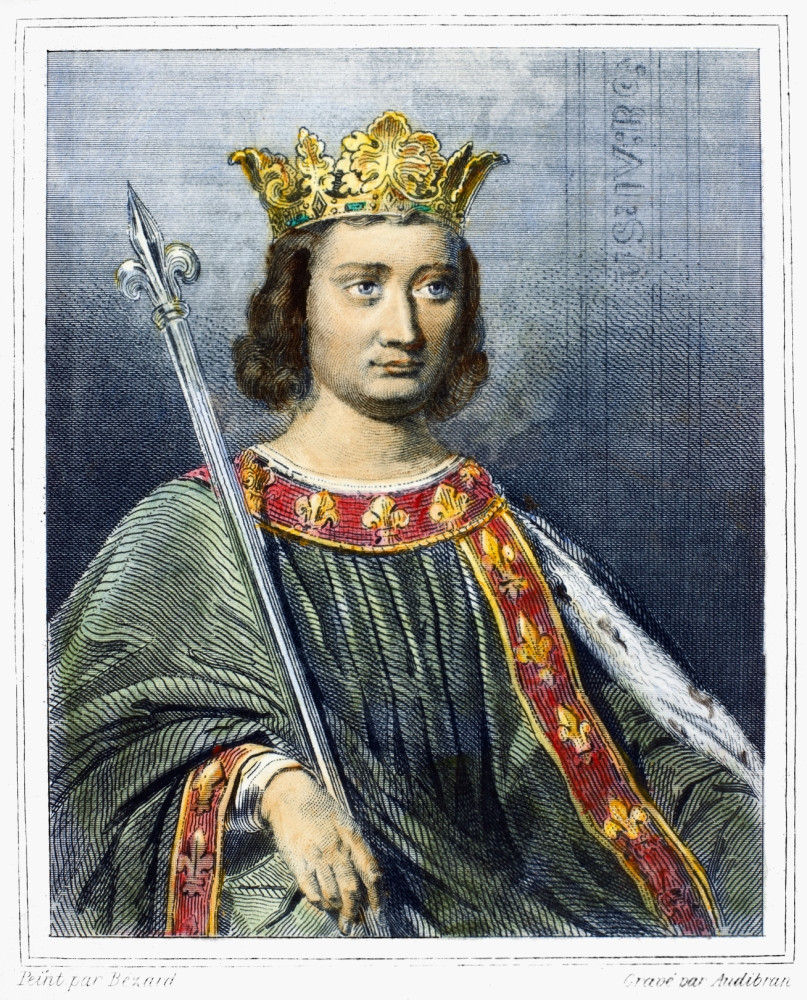
By the late Middle Ages, French monarchs actively worked to dismantle feudal independence. Kings such as Philip IV asserted royal authority over taxation and administration, while later rulers weakened the military power of the nobility by restricting private armies. The crown no longer relied on feudal levies; it created standing forces loyal to the state. Permanent taxes replaced negotiated contributions, giving the monarchy financial independence and stability.
This transformation accelerated in the early modern period. A growing bureaucracy (staffed by educated officials rather than hereditary nobles) ran the kingdom in the king’s name. Governance became centralized, standardized, and increasingly impersonal. Power was no longer something nobles inherited; it was something the state exercised.

The process reached its symbolic and practical peak under Louis XIV. At Versailles, the nobility was drawn into a world of ritual, luxury, and constant royal surveillance. Political power rested firmly with the monarch, justified by the doctrine of divine right. France had become a centralized monarchy in which authority radiated outward from the crown.
Yet this achievement came with consequences. As power concentrated at the top, traditional representative bodies faded into irrelevance, and social inequality hardened. The monarchy created unity and order, but also distance and exclusion. The centralized state that brought France together would eventually provoke the very forces that sought to destroy it.
The French Revolution and the End of Absolutism (1789)

By the late eighteenth century, France looked powerful from the outside, but inside, it was cracking. The centralized monarchy that had once brought order now felt distant and untouchable. Power was locked at the top, while most of the population carried the weight below. Taxes fell hardest on those with the least, while privilege shielded the clergy and nobility. The system worked, until it didn’t.

Years of war drained the treasury. Extravagant court life at Versailles became a symbol of everything broken. Bread grew scarce, prices rose, and frustration hardened into anger. Yet the monarchy remained frozen in ceremony and tradition, unable (or unwilling) to reform itself. When Louis XVI called the Estates-General in 1789, it was meant to solve a financial crisis. Instead, it unleashed a political one.
The Revolution did not begin with violence, but with words. Debates over representation quickly turned into a challenge to authority itself. When the Third Estate declared itself the National Assembly, it claimed something radical: sovereignty did not belong to the king, but to the nation. The storming of the Bastille soon followed, not for its military value, but for what it represented. The people had crossed a line, and there was no going back.
What began as a demand for reform spiraled into a complete dismantling of the old order. Feudal privileges were abolished, noble titles erased, and the authority of the Church dramatically reduced. The Declaration of the Rights of Man and of the Citizen promised liberty, equality, and popular sovereignty, ideas that would echo far beyond France. Absolutism, once framed as divinely ordained, was exposed as fragile and replaceable.
But revolution is never clean. Fear spread as quickly as hope. Foreign threats, internal rebellion, and political extremism pushed the Revolution into its most violent phase. During the Reign of Terror, the state turned against its own people in the name of protecting the Revolution. Thousands were executed, including the king himself. The monarchy that had stood for centuries ended not with ceremony, but with a blade.
In the aftermath, France was transformed. The old social hierarchy was shattered, and citizenship replaced subjecthood. Power no longer flowed from birthright, but from political participation, at least in theory. Yet stability remained elusive. The Revolution destroyed absolutism, but it did not immediately deliver peace.
Still, nothing was the same after 1789. The Revolution rewired French political life and reshaped modern ideas of nationhood, rights, and resistance. It proved that a centralized monarchy could be overthrown, and that once people tasted political power, there was no returning to silence.
Napoleon Bonaparte and the Imperial Reordering of France

The French Revolution tore down the old world, but it left behind uncertainty, exhaustion, and fear. By the late 1790s, France was a republic in name yet unstable in practice, caught between revolutionary ideals and the need for control. Into this vacuum stepped Napoleon Bonaparte, a general shaped by war, ambition, and opportunity. He did not end the Revolution; he reorganized it.
Napoleon rose quickly, not through noble lineage, but through merit and military success. His 1799 coup ended the fragile Directory and replaced it with the Consulate, presenting stability as salvation. Though republican institutions remained on paper, real power concentrated in Napoleon’s hands. In 1804, he crowned himself Emperor, signaling a dramatic shift: France had rejected monarchy, only to embrace empire.
Yet Napoleon’s rule was not a simple return to absolutism. He preserved many revolutionary achievements while stripping them of their chaos. The Napoleonic Code standardized laws across France, replacing feudal privileges with legal equality for male citizens. Careers in the military and government were opened based on talent rather than birth, reinforcing the revolutionary promise of merit. At the same time, civil liberties were narrowed. Press freedom declined, political opposition was suppressed, and authority flowed firmly from the center.
Napoleon also restructured the French state with precision. A centralized administrative system placed prefects in charge of regions, ensuring loyalty to Paris rather than local interests. Education was reorganized to serve the state, training administrators and officers rather than independent thinkers. The Church, once dismantled by revolutionaries, was brought back under state supervision through the Concordat, restoring religious stability without surrendering political control.
Beyond France, Napoleon sought to remake Europe itself. Through conquest and diplomacy, he exported French institutions, legal systems, and administrative reforms across the continent. Empires fell, borders shifted, and old regimes collapsed under the pressure of Napoleonic warfare. Yet these victories came at immense cost. Endless war drained France’s population and resources, and resistance grew both abroad and at home.
Napoleon’s downfall was as dramatic as his rise. Defeat and exile ended his empire, but not his legacy. The imperial reordering he imposed endured long after his fall. France emerged with a stronger state, clearer laws, and a lasting model of centralized governance. Napoleon proved that the Revolution could be disciplined, controlled, and institutionalized, but also that power, once concentrated, always carries the risk of overreach.
Revolutions and Republics in the Nineteenth Century
The fall of Napoleon did not bring peace to France, it brought confusion. After years of empire, war, and centralized control, the nineteenth century opened with a country unsure of what it wanted to be. Monarchy returned, but it no longer ruled unquestioned. Revolution had cracked the illusion of permanence, and every regime that followed ruled on borrowed time.
The Bourbon Restoration attempted to rewind history, placing kings back on the throne as if 1789 had been a temporary mistake. It failed. The monarchy survived only by compromise, balancing royal authority with constitutional limits it never fully accepted. Tension simmered beneath the surface, and in 1830 it erupted. The July Revolution replaced one king with another, trading absolutism for a “citizen king” who promised liberal reform. Instead, power settled once again in the hands of elites, leaving workers and radicals disillusioned.
By 1848, frustration exploded across Europe, and France stood at its center. Economic hardship, political exclusion, and growing social inequality ignited another revolution, sweeping away the July Monarchy and proclaiming the Second Republic. For the first time, France experimented seriously with universal male suffrage and republican governance. Hope surged. So did fear. Class divisions deepened, and revolutionary unity fractured almost immediately.
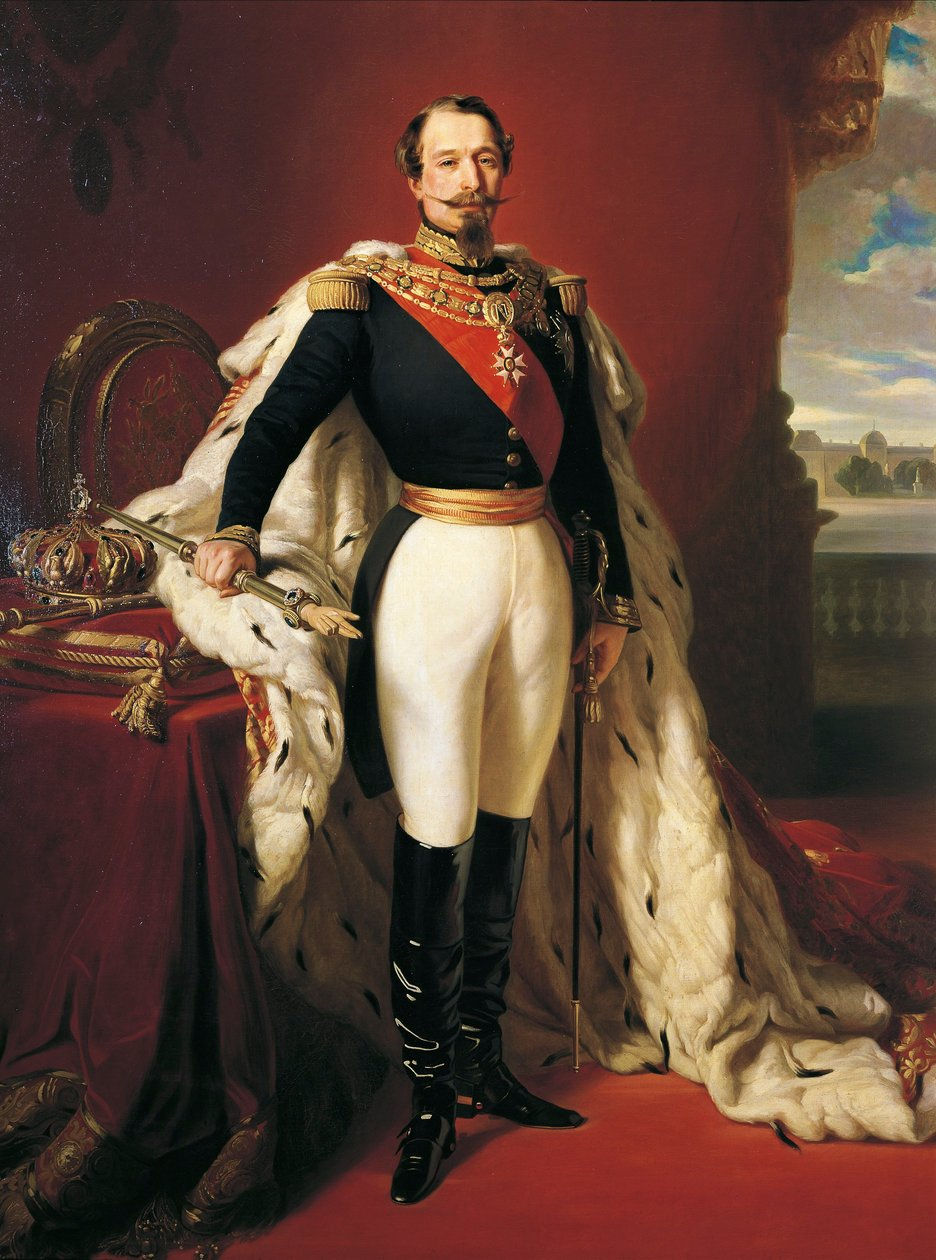
Out of this instability rose a familiar name. Louis-Napoléon Bonaparte, nephew of the former emperor, capitalized on nostalgia and popular support. Elected president, he soon staged a coup and crowned himself Emperor Napoleon III. Once again, France traded republican ideals for authoritarian stability. The Second Empire brought modernization, urban transformation, and economic growth, but at the cost of political freedom. Paris was rebuilt, railways expanded, and industry flourished, while dissent was closely monitored.
The illusion of strength collapsed in 1870. Military defeat against Prussia shattered the empire and humiliated the nation. Napoleon III fell, and the Third Republic emerged from the wreckage. Its birth was violent and uncertain, marked by the Paris Commune, a radical, short-lived experiment in self-governance brutally crushed by the state. Yet unlike its predecessors, the Third Republic endured.
By the end of the century, France had cycled through monarchies, empires, and republics with relentless speed. This instability was not failure, it was transformation through trial. Each collapse stripped away old certainties, and each new regime tested different answers to the same question: who should rule, and in whose name? The nineteenth century did not resolve France’s political identity, but it hardened a crucial lesson, power could change hands, and the nation would survive.
France in the World Wars: Collapse, Resistance, Renewal

The First World War shattered any remaining illusion of stability in France. When war broke out in 1914, the nation entered the conflict with confidence, industrial power, and a belief in endurance. What followed was four years of devastation. Trenches cut through the French countryside, entire towns vanished, and a generation was consumed by industrialized warfare. Victory came in 1918, but it was a hollow one. France had survived, yet it was deeply wounded.
The aftermath of the war reshaped French society. Millions were dead, the economy strained, and collective trauma lingered beneath public celebrations. The Third Republic endured, but it governed a nation exhausted by sacrifice. The interwar years were marked by fear of another conflict, political fragmentation, and an uneasy reliance on defensive strategies rather than renewal. France had won the war, but it had not recovered from it.
That fragility was exposed in 1940. When Nazi Germany invaded during the Second World War, France collapsed with shocking speed. Military defeat came within weeks, followed by occupation and national humiliation. The government surrendered, and the Vichy regime emerged, choosing collaboration over resistance. For many, this moment represented a moral fracture as deep as the military one. The centralized state that once promised strength failed when it was needed most.
Yet collapse was not the whole story. Resistance grew in the shadows, slow, dangerous, and fragmented at first. Ordinary citizens, students, workers, and former soldiers took enormous risks to oppose occupation. From underground networks to armed resistance, defiance became an act of survival. Abroad, Charles de Gaulle refused surrender, positioning himself as the voice of a France that would not disappear.
Liberation came in 1944, but renewal was neither simple nor clean. The aftermath forced France to confront collaboration, guilt, and division. The Fourth Republic was established, determined to rebuild democracy and restore legitimacy. At the same time, the country faced new challenges: economic reconstruction, decolonization, and the loss of imperial power. Victory did not return France to its former position, it pushed it into reinvention.
The World Wars permanently altered France’s political identity. They exposed the limits of military power, the dangers of political complacency, and the cost of division. Yet they also revealed resilience. Out of defeat came resistance; out of occupation came renewal. France emerged from the twentieth century no longer defined by empire or battlefield glory, but by survival, memory, and the hard-earned lessons of collapse.
The Birth of the Fifth Republic and Modern French Governance
By the late 1950s, France was once again stuck in instability, but this time, it was quieter and more dangerous. The Fourth Republic, born after the Second World War, struggled under the weight of weak executive power, fragile coalitions, and constant government turnover. Cabinets rose and fell at exhausting speed, while colonial wars (most notably in Algeria) exposed the state’s inability to act decisively. France was not collapsing in flames; it was slowly unraveling.
The crisis reached its breaking point in 1958. Fear of military insubordination and political paralysis pushed the country toward an extraordinary solution: the return of Charles de Gaulle. A symbol of wartime resistance and national authority, de Gaulle was invited back not to govern as before, but to refound the system itself. The result was the Fifth Republic, a constitutional reset designed to end chronic instability.
The new constitution dramatically strengthened the executive branch. The president became the central figure of political life, equipped with powers that previous republics had deliberately avoided. This was not an accident. The Fifth Republic was built on a clear lesson from the past: excessive parliamentary fragmentation had weakened the state. Stability now mattered more than ideological purity. In exchange for strong leadership, France accepted tighter institutional control.
Modern French governance emerged from this balance. While democratic institutions remained intact, authority became more centralized and structured. The president guided foreign policy, defense, and national direction, while parliament’s role was deliberately constrained. This system proved resilient. Unlike earlier regimes, the Fifth Republic endured crises without collapsing into revolution or authoritarian takeover.
At the same time, France was redefining its place in the world. Decolonization accelerated, ending centuries of imperial ambition. European integration offered a new path forward, allowing France to project influence through cooperation rather than conquest. Economic modernization, social reform, and cultural transformation reshaped daily life, even as the centralized state remained a defining feature of governance.
Yet the Fifth Republic is not without tension. Strong executive power has repeatedly raised questions about representation, protest, and democratic limits. Moments of social unrest (from student movements to labor strikes) have tested the system’s flexibility. Still, unlike earlier centuries, conflict now unfolds within a stable constitutional framework rather than through regime collapse.
The birth of the Fifth Republic marked a turning point. After centuries of upheaval, France chose continuity over rupture. Modern French governance is the product of hard-earned restraint, a system shaped by revolution, empire, defeat, and renewal, finally designed not to remake the nation, but to hold it together.
Conclusion of France political transformation
French history is not a story of steady progress, but of repeated reinvention. From the slow rise of royal authority out of feudal fragmentation to the explosive collapse of absolutism, from revolutionary ideals to imperial order, France has moved forward by breaking itself apart and rebuilding again. Each transformation left marks that never fully disappeared, shaping the nation’s political instincts and collective memory.
The French Revolution shattered the idea that power was fixed and untouchable. Napoleon proved that chaos could be disciplined, even as he revealed the dangers of concentrated authority. The nineteenth century tested every possible regime (monarchy, empire, republic) until instability itself became a defining feature. The World Wars exposed both the fragility of the state and the resilience of its people, forcing France to confront defeat, collaboration, and resistance. Out of this reckoning emerged a determination to preserve democracy without surrendering stability.
The Fifth Republic represents the outcome of this long struggle. It is not perfect, nor free of tension, but it reflects a conscious choice: to contain conflict within institutions rather than allow it to destroy them. Modern France is the product of centuries of rupture, shaped by the refusal to remain static.
In this sense, transformation is not an exception in French history, it is the rule. And it is through these repeated breaks, failures, and renewals that France became what it is today.
Author: The Museum of Time, Asal Mirzaei
30 January 2026


Comments