Why Did Australia Declare War on Emus? The True Story of the Great Emu War
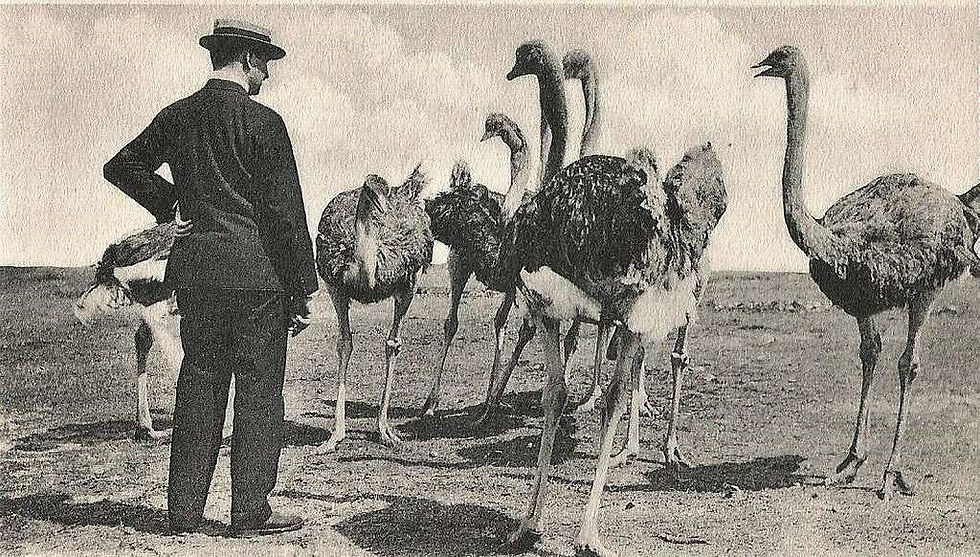
Australia has no shortage of strange historical moments, but few feel as surreal as the so-called “Emu War” of 1932. At first glance, it sounds almost fictional: armed soldiers, military equipment, and thousands of large flightless birds clashing across the dry farmlands of Western Australia. The internet still treats the event like a legendary punchline, a modern nation somehow being humbled by animals that cannot even fly. Memes, videos, and jokes continue to revive the story because it feels impossible to invent: a country that endured the brutality of World War I seemingly outmaneuvered by 20,000 emus.
Yet beneath the absurdity sits something far more human. The conflict emerged during a difficult period for Australian farmers struggling through the aftermath of World War I and the economic pressure of the Great Depression. When massive groups of emus migrated inland, farmland turned into a battlefield of survival rather than comedy. Crops vanished, fences collapsed, and frustration escalated quickly enough for the military to become involved in what should have been an agricultural crisis.
What followed was chaotic, strangely cinematic, and unexpectedly revealing. The Emu War was never truly a war in the traditional sense, but it exposed the limits of human control when nature refuses to cooperate. Nearly a century later, the story survives because it exists in two worlds at once: part historical event, part internet myth, and entirely unforgettable.
Content Table
The Backstory: Soldiers Turned Farmers
When World War I ended, Australia faced a difficult question shared by many nations: what happens to thousands of returning soldiers once the fighting stops? The answer, at least on paper, seemed hopeful. Through the Soldier Settlement Scheme, veterans were granted plots of land across regions like Western Australia and encouraged to become farmers. The idea carried a certain national romance to it, men who had survived the trenches would now build peaceful lives from the soil itself. Wheat farming became both an economic plan and a symbolic reward for military service.
Reality, however, was far less generous.
Much of the land handed to veterans was difficult to cultivate, isolated, and vulnerable to harsh environmental conditions. Farming required experience, money, and stability, yet many former soldiers possessed little of any of the three. Even so, families pushed forward, believing persistence could compensate for uncertainty. For a brief period, wheat production expanded, and the settlements appeared sustainable.
Then the Great Depression arrived like a slow collapse of gravity.
Global wheat prices fell sharply during the late 1920s and early 1930s, crushing already fragile farming communities. Crops demanded exhausting labor while generating smaller and smaller profits. Promised government support often failed to materialize in meaningful ways, leaving many veterans trapped between debt and drought. Across Western Australia, frustration thickened like dust in the dry air. These were men who had survived machine guns and artillery in Europe, only to return home and fight economic ruin instead.
And then came the emus.
Every year, large populations of emus migrated inland after breeding season, moving toward farming regions in search of water and food. In 1932, their numbers surged dramatically, roughly 20,000 birds spreading across vulnerable wheat farms. The destruction was immediate and relentless. Emus trampled crops, tore through fences, and opened pathways for rabbits to invade fields already hanging by a thread. Farmers watched months of labor disappear beneath waves of feathers and dust.
By that point, the situation no longer felt absurd to the people living through it. It felt desperate. And desperation has a way of turning even the strangest ideas into government policy.
The Declaration of War
By late 1932, frustration across Western Australia had reached a breaking point. Farmers were no longer dealing with a minor pest problem; they were watching entire livelihoods collapse under waves of migrating emus. Fences were shredded, wheat fields flattened, and every failed harvest pushed struggling families deeper into debt. Many of the farmers affected were former World War I veterans, men who had once fought for the nation and now felt abandoned by it. Their appeals to the government grew louder, sharper, and increasingly desperate.
Eventually, the farmers requested something extraordinary: military intervention.
Specifically, they wanted machine guns.
The request sounds ridiculous in hindsight, which is partly why the story survives so vividly online today. But within the context of the Great Depression, the proposal carried a grim logic. The emu population was massive, ammunition was relatively cheap, and the government already possessed military equipment left over from the war. To the farmers, this was not comedy, it was survival. If conventional farming measures had failed, then perhaps military force could succeed.
Enter Sir George Pearce, Australia’s Minister of Defence. Publicly, Pearce approved the operation as a response to the farmers’ crisis. Unofficially, the mission offered something else as well: a convenient public relations opportunity. Sending soldiers into the outback to combat destructive pests allowed the government to appear decisive during a period when economic anxiety was spreading across the country. It also created a strange form of live target practice for troops still existing in the long shadow of World War I.
The operation itself was modest in scale but bizarre in symbolism. Soldiers from the Royal Australian Artillery were deployed with Lewis machine guns and thousands of rounds of ammunition. Major G.P.W. Meredith was placed in command. The objectives appeared simple enough on paper: reduce the emu population, protect wheat farms, and restore confidence among struggling settlers.
But nature rarely follows military expectations.
The planners imagined large clusters of slow-moving birds gathering conveniently within firing range. Instead, the emus behaved with startling unpredictability. They scattered rapidly, moved in smaller groups, and navigated rough terrain with surprising efficiency. Some soldiers reportedly compared their movements to guerrilla tactics, describing the birds as fast, coordinated, and frustratingly difficult to target.
What was intended to be a straightforward extermination campaign quickly began transforming into something far stranger: a military operation against an enemy that refused to behave like one. And as newspapers began reporting on the chaos, the story drifted from national policy into the territory of legend.
Operation Emu: The Campaigns and Tactics
The military campaign against the emus officially began in November 1932, and from the very first days, the operation drifted into disorder. Soldiers under Major G.P.W. Meredith arrived in Western Australia equipped with Lewis machine guns, thousands of rounds of ammunition, and a level of confidence that now feels almost tragic in hindsight. On paper, the assignment appeared embarrassingly simple. The emus were large birds, unable to fly, and concentrated in farming regions already familiar to local settlers. Military planners imagined organized extermination efforts capable of thinning the population quickly.
Instead, they encountered chaos wrapped in feathers.
The first major engagement took place near Campion, where soldiers attempted to ambush a large group of emus gathered near a dam. Around fifty birds entered firing range, and the troops opened fire expecting an efficient massacre. But almost immediately, the formation collapsed. The emus scattered in every direction with startling speed, disappearing across uneven terrain before accurate shots could be sustained. Reports from the operation describe birds splitting into smaller groups almost instinctively, making them dramatically harder targets. The machine guns, designed for concentrated infantry combat during World War I, suddenly felt awkward and inefficient against fast-moving animals spread across open farmland.
Then the weather turned against the soldiers too.
Heavy rain made transportation difficult and reduced visibility across the region. Mud clogged movement, while the emus continued navigating the landscape with ease. In one especially infamous attempt, troops mounted a machine gun onto a truck in hopes of pursuing the birds directly. The result bordered on slapstick. The vehicle bounced violently across rough terrain, preventing accurate fire, while the emus simply outran the pursuit. At points, the truck reportedly struggled to keep pace at all.
The deeper the campaign progressed, the stranger the tone became. Major Meredith himself later described the emus almost like a military force. According to accounts from the time, he admired their endurance, organization, and survival instincts. Some birds appeared to act as lookouts while others moved through feeding areas. Once gunfire erupted, entire flocks scattered with remarkable efficiency. Newspapers quickly seized on these details, transforming the operation into a public spectacle. The image of trained soldiers repeatedly failing to eliminate flightless birds carried an irresistible layer of absurdity.
But beneath the humor sat a genuine tactical problem.
Lewis guns were devastating weapons against slow or concentrated targets, yet emus rarely behaved in predictable formations. They moved rapidly, absorbed difficult terrain effortlessly, and possessed surprising physical durability. Even birds that were wounded could continue running long distances before collapsing. Ammunition expenditure became embarrassingly high compared to confirmed kills. In several engagements, hundreds or even thousands of rounds were fired for relatively limited results.
Public criticism began mounting almost immediately. Newspapers mocked the operation, politicians questioned its effectiveness, and the military found itself trapped in an increasingly awkward public relations disaster. What had been introduced as a confident government intervention was beginning to resemble an expensive farce.
Yet despite the setbacks, the campaign did not end immediately.
A second attempt was authorized later in November after continued pressure from struggling farmers. Major Meredith returned to the field with additional ammunition and renewed determination. This phase of the operation achieved somewhat higher kill counts, largely because troops adapted by targeting smaller groups more strategically rather than attempting massive ambushes. Even so, the overall situation barely changed. The emu population remained enormous, the terrain still favored the birds, and maintaining large-scale military operations across isolated farmland proved unsustainable.
By the end of the campaign, official reports claimed that thousands of emus had been killed. However, the broader objective (securing the farms and decisively controlling the migration) remained unfulfilled. The birds continued moving through agricultural regions, and the government eventually withdrew military involvement altogether.
In a purely technical sense, the emus had not “won” a war. But culturally, the damage was already done. The image of a modern military struggling against wildlife became too bizarre to forget. Over time, the story escaped history books and entered internet mythology, where every failed ambush and every bouncing machine-gun truck transformed into evidence of humanity’s eternal weakness against chaos itself.
Why the Emus Won: The Biology of a Competent Enemy
Part of what makes the Emu War so fascinating is that the birds were not merely lucky. The military campaign struggled because emus were, in many ways, exceptionally well-designed survivors. What appeared at first to be oversized farm pests turned out to be resilient, fast-moving animals perfectly adapted to the harsh Australian environment. The soldiers brought machine guns shaped by the logic of industrial warfare; the emus answered with millions of years of evolution.
And evolution proved annoyingly effective.
One of the most surprising problems encountered during the campaign was the birds’ physical durability. Emus possess dense plumage and thick skin that helped protect them from Australia’s unforgiving climate and rough terrain. While they were certainly not “bulletproof” in any literal sense, many reports from the operation described wounded birds continuing to run long distances after being shot. A clean kill was often difficult, especially when firing at moving targets across uneven ground. Soldiers discovered that machine-gun fire, devastating against human formations in World War I, became far less efficient against scattered animals built for endurance and motion.
Major Meredith himself reportedly spoke about the birds with a strange mixture of frustration and admiration. Some accounts describe emus surviving injuries severe enough to stop most animals immediately, only to disappear into the landscape before collapsing much later. In practical terms, this meant ammunition disappeared rapidly while confirmed kills remained inconsistent. The psychological effect mattered too. Every failed volley chipped away at the image of military superiority the operation was supposed to project.
Then there was the flock behavior.
Observers during the campaign frequently noted what seemed like organized movement patterns among the birds. Large groups often broke into smaller units once threatened, making them dramatically harder to target. Some reports even described certain emus acting almost like sentries, standing alert while the rest of the flock fed. At the first sign of danger, the birds scattered instantly across wide areas. Whether this was true coordination or simply instinctive herd behavior hardly mattered; to the soldiers on the ground, it looked tactical.
And perhaps most importantly, the emus were fast. Extremely fast.
An adult emu can sprint at speeds approaching:
50 km\h = 31 mph
That speed, combined with powerful legs and enormous stamina, made pursuit nearly impossible across the rough Australian outback. Trucks struggled to maintain stable movement over the terrain, while the birds moved through fences, scrubland, and dry fields with ease. The military relied on heavy equipment built for structured combat; the emus relied on mobility, unpredictability, and terrain familiarity.
In the end, the campaign revealed something quietly humbling. Human technology often assumes that force alone guarantees control. But nature does not operate according to military doctrine. The emus were not strategic geniuses plotting against Australia, nor were they cartoon villains defeating an army. They were simply animals extraordinarily adapted to survive in a difficult environment, and for a few chaotic weeks in 1932, that was more than enough.
The Casualties and Aftermath
By the time the military operation finally slowed to an end, the results looked painfully disproportionate. Soldiers had burned through enormous quantities of ammunition, spent weeks chasing birds across difficult terrain, and generated headlines that made the Australian government look increasingly absurd. Official reports claimed that several thousand emus had been killed during the campaign, though estimates varied wildly depending on the source. Meanwhile, the broader emu population remained massive, scattered across the countryside with enough surviving birds to continue damaging farmland.
The imbalance became impossible to ignore. Modern retellings often exaggerate the numbers into “millions of rounds versus a handful of birds,” which is not literally accurate, but the exaggeration exists for a reason: the operation felt inefficient on a near mythological level. The military had entered the Australian outback expecting a straightforward extermination effort and instead found itself trapped in a war of diminishing returns. Ammunition disappeared faster than results appeared.
And the media noticed immediately.
Local newspapers began treating the campaign less like a government initiative and more like serialized comedy. International press outlets soon followed, fascinated by the sheer strangeness of the story. Headlines emphasized the humiliation factor relentlessly: trained soldiers with machine guns failing to decisively defeat large flightless birds. Journalists described the emus almost like disciplined military opponents, capable of tactical retreats and coordinated movement. The narrative spread quickly because it carried the perfect mixture of absurdity and symbolism. In the middle of the Great Depression, while nations struggled with economic collapse and political instability, Australia had somehow stumbled into a battlefield against wildlife.
The government, unsurprisingly, became eager to distance itself from the operation.
Public criticism intensified not only because the campaign seemed ineffective, but because it exposed deeper anxieties underneath the humor. The Emu War revealed how fragile rural communities had become during the Depression era. Farmers were desperate enough to request military support against animals, and the government was desperate enough to approve it. The laughter surrounding the story partially came from discomfort. It felt easier to turn the campaign into a joke than to confront the economic desperation that produced it in the first place.
Yet the emu problem itself did not disappear.
After military involvement faded, authorities eventually turned toward a far less dramatic solution: bounty systems. Instead of deploying soldiers, the government offered financial rewards for emu carcasses or proof of kills. Farmers and local hunters could now reduce emu populations independently while receiving compensation for their efforts. The strategy lacked the cinematic chaos of machine guns mounted on trucks, but it proved significantly more practical over time. Tens of thousands of emus were culled through bounty programs in the following years, achieving results the military campaign never fully managed.
In other words, the “war” ended not with a decisive battlefield victory, but with bureaucracy, incentives, and persistence, a deeply unglamorous conclusion to one of the strangest military episodes of the twentieth century.
And maybe that is why the story survives so well online today. The Emu War feels almost designed for internet culture: absurd enough to become a meme, but real enough to remain fascinating. It compresses human arrogance, political desperation, environmental conflict, and pure chaotic energy into a single historical moment. Beneath every joke about Australia losing a war to birds sits a quieter truth: sometimes history becomes unforgettable precisely because it refuses to behave seriously.
Conclusion of the great emu war
Nearly a century later, the Great Emu War has escaped the boundaries of history and become something stranger: internet mythology. Memes, documentaries, videos, and online jokes continue reviving the story because it feels almost impossible to believe. A modern military deploying machine guns against thousands of flightless birds sounds less like reality and more like satire. That absurdity is exactly what keeps the story alive.
But beneath the humor sits a surprisingly relevant lesson.
The Emu War was not truly about birds defeating a nation. It was about human confidence colliding with nature’s unpredictability. Australian authorities believed military force and modern technology could quickly solve an environmental problem. Instead, they encountered animals perfectly adapted to the harsh terrain, fast, resilient, and difficult to control.
That is why the story still resonates today. It reminds us that nature does not follow human plans, political pressure, or military logic. Sometimes the natural world simply refuses to cooperate, and history becomes unforgettable because of it.
Project The Great Southern Land
by The Museum of Time
22 April 2026


Comments