The 18th Century Banyan: How the Japanese Kimono Conquered Europe
Updated: Apr 26

There’s something quietly cinematic about an 18th-century European morning, the kind where the air is still, the light spills softly through tall windows, and a gentleman lingers at his desk, wrapped not in stiff tailoring, but in flowing silk. Not quite dressed, not quite undone. Somewhere in between. And what he’s wearing isn’t entirely European at all.

Before the banyan became a quiet symbol of intellect and leisure in the 18th century, it existed in a more elusive, almost mysterious form during the 17th century, an origin phase shaped by trade, diplomacy, and curiosity.
It was through the powerful network of the Dutch East India Company that Japanese garments first reached Europe. At the time, Japan (under the rule of the Tokugawa Shogunate) maintained strict control over foreign relations, allowing only limited contact with the outside world. The Dutch were among the few permitted trading partners, and within this controlled exchange, textiles became more than goods, they became cultural messengers.
Some of the earliest robes arriving in Europe were not imitations, but authentic Japanese garments, often presented as diplomatic gifts. In the Dutch Republic, these robes came to be known as japonse rok, and they were rare, treasured objects. Owning one meant far more than having wealth; it suggested direct access to distant worlds, to networks of exchange that stretched far beyond Europe’s borders.
At this stage, the garment had not yet been fully absorbed into European fashion. Its shape remained closer to the original kimono, its materials distinctly foreign, its meaning still forming. It was worn occasionally, often in private, and more as a curiosity than a cultural statement.
Yet within this quiet presence, something was already beginning. The robe introduced a new idea of clothing, one that was loose, unstructured, and deeply tied to comfort. And slowly, almost imperceptibly, it planted the seed for what would later become not just a fashion trend, but a way of thinking, dressing, and presenting oneself to the world.
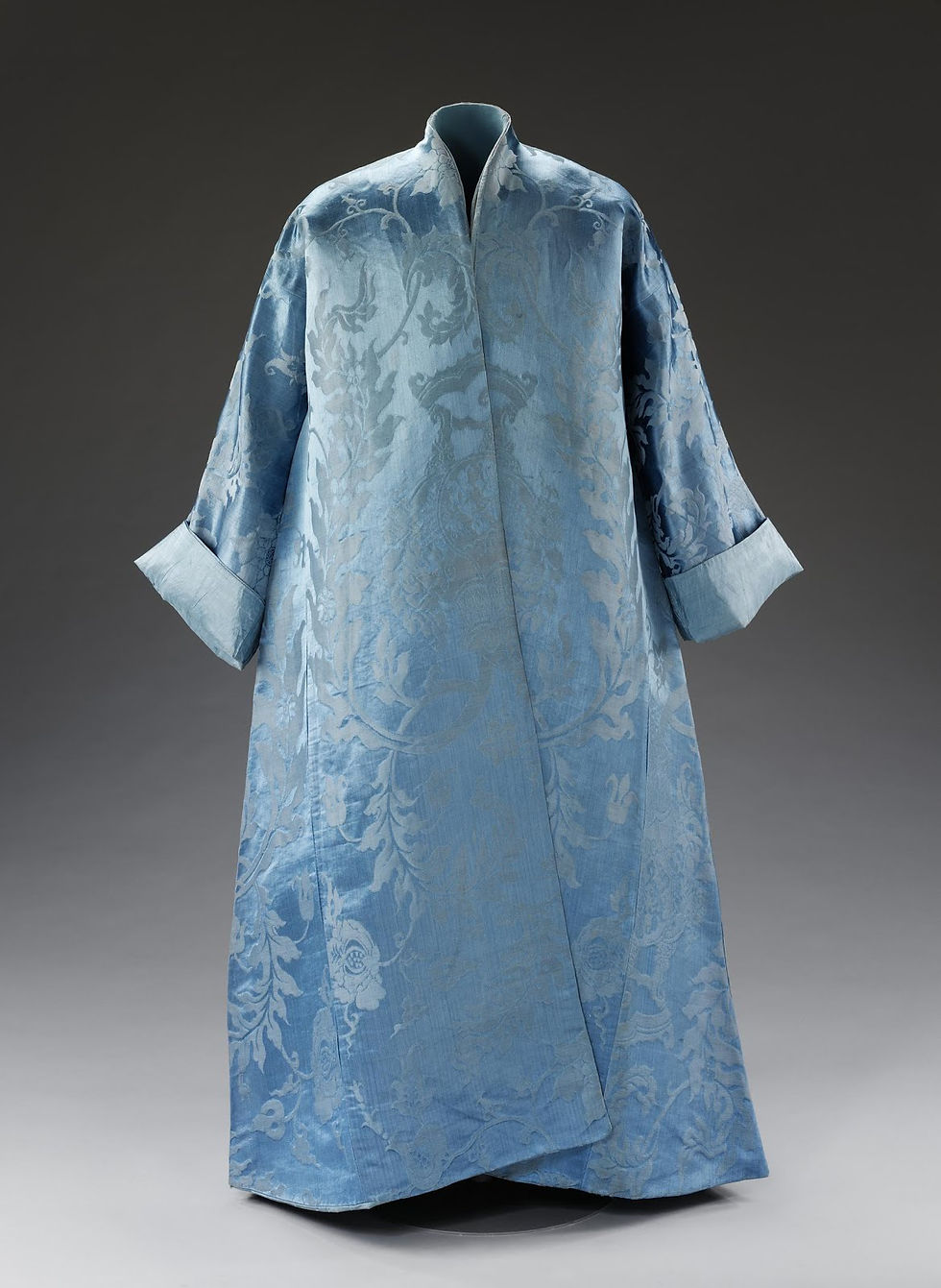
During the 18th century, a peculiar yet telling fashion took hold among Europe’s elite: the adoption of Japanese-style robes, known as banyans, japonse rok, or simply “nightgowns.” Despite the name, these garments had little to do with sleep. They were, instead, a carefully curated symbol of status, worn in private spaces, yet deeply public in what they communicated.
As we told the story begins a century earlier, when global trade routes started weaving distant cultures together in ways never seen before. Through the powerful network of the Dutch East India Company, Japanese garment (and more importantly, their silhouettes) entered Europe. The kimono, with its loose, T-shaped structure, stood in sharp contrast to the rigid tailoring of European dress, but Europe didn’t just receive this garment, it reimagined it.
In the Netherlands, the robe became the japonse rok, a name that directly acknowledged its origin.
In England, it evolved into the banyan, becoming especially popular during the Georgian era.
Meanwhile, in France, similar garments appeared under names like robe de chambre, carrying the same meaning: a garment of the room, of intimacy, of thought. Even in colonial spaces like United States, intellectual figures adopted the style, quietly signaling their connection to global culture.
This wasn’t just fashion, it was geography stitched into fabric for them, it was high social status.
To understand the weight of a banyan, you have to understand its cost. Authentic 18th-century versions were often made from imported silk (Chinese damask, Japanese textiles, or Indian chintz) materials that traveled thousands of kilometers before becoming clothing. Today, surviving historical examples can sell for around €2,500-$3,000 or more at auction, depending on craftsmanship and rarity.
Modern reproductions tell a similar story: a custom silk banyan can cost around €1,000, while simpler versions range between $200-$300.
Now imagine that in the 18th century, when wages were dramatically lower and luxury textiles were even more exclusive. Owning one wasn’t just a purchase. It was a statement of serious wealth and wearing it meant something.
The banyan signaled that its wearer was not only rich, but also cultured. It whispered: I have access to the world. It suggested a man who reads, who thinks, who exists slightly outside the rigid expectations of society. And yet, ironically, this “private” garment became a public performance, especially in portraiture.
Scholars, philosophers, and gentlemen were often painted wearing banyans, sometimes paired with turbans, constructing an image of intellectual ease. The robe softened the body and, in a way, softened the mind. According to historical interpretations, the garment was even associated with relaxation that encouraged thought, comfort as a pathway to intellect.
It’s almost poetic: loosen the clothes, and maybe the ideas flow easier too.
Material culture played a huge role in this identity. These robes were crafted from silk, cotton, linen, sometimes quilted for warmth, often richly patterned and imported Indian chintz became especially popular, blending Japanese-inspired form with South Asian textile traditions. The result? A global hybrid long before globalization became a buzzword.
And then there’s the feeling of it.
Because beyond symbolism, the banyan was comfortable, and that mattered more than it sounds. European fashion at the time was restrictive, structured, almost architectural. Tight coats, corsetry, layered fabrics. The banyan disrupted that. It flowed. It breathed. It allowed the body to exist without constant correction.
Worn over shirts and breeches (or shifts for women) it created a softer silhouette, one that felt almost rebellious in its ease.
Though more strongly associated with men, women adopted similar garments as informal morning wear, often called wrapping gowns. In both cases, the banyan blurred lines, between genders, between public and private, between East and West.
But there’s another layer here, and it’s not as soft.
Europe’s fascination with these robes was part of a broader obsession with the “exotic.” Japan, under the Tokugawa Shogunate, remained relatively closed to the outside world, which only deepened its mystique. What Europeans saw (and wore) was often filtered through imagination as much as reality.
Still, that fascination didn’t fade. It evolved.
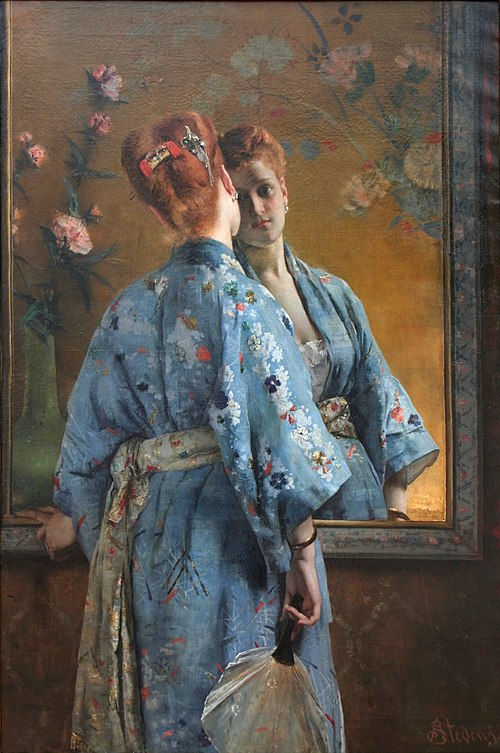
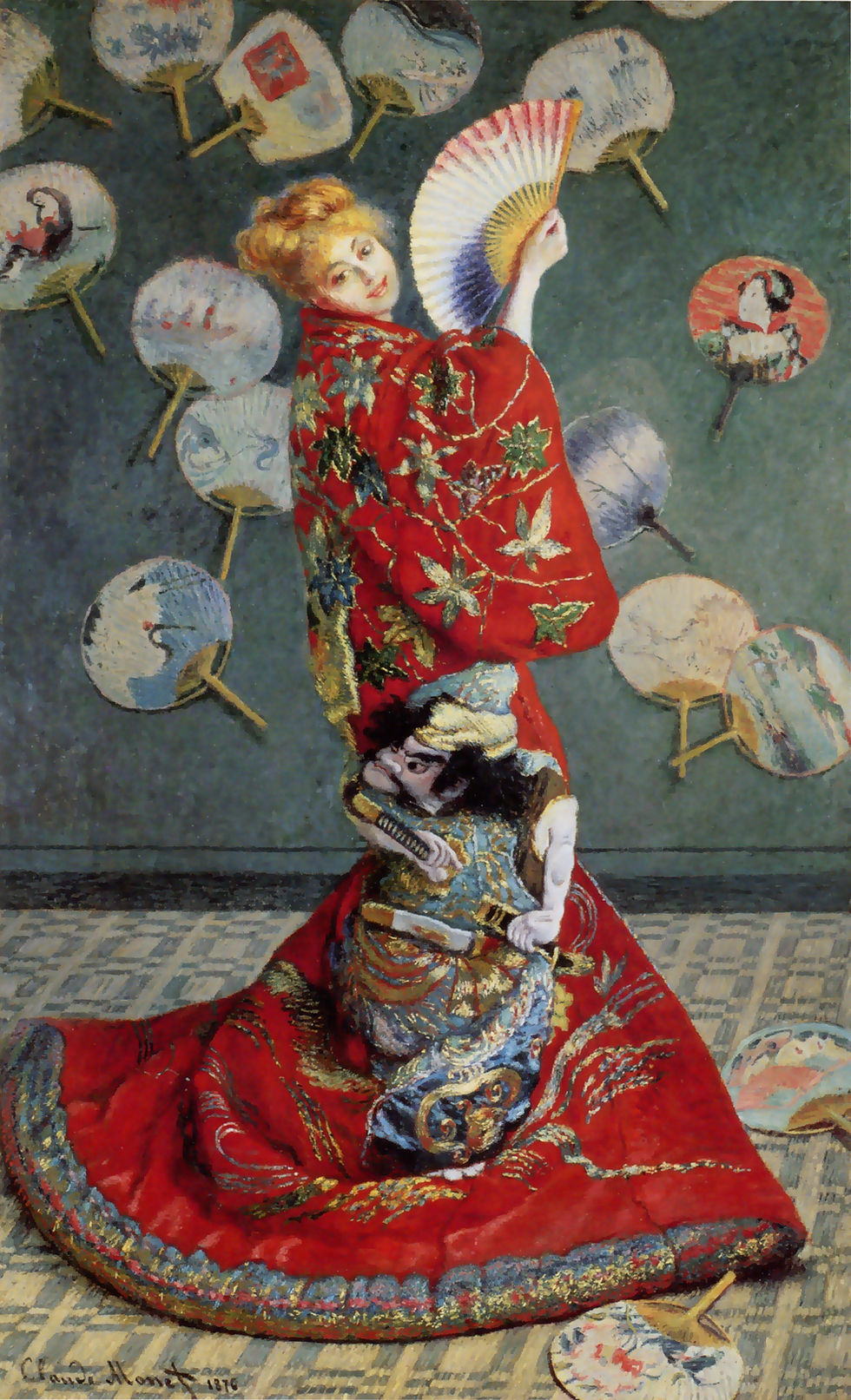
By the 19th century, it would bloom into Japonisme, where Japanese aesthetics reshaped Western art, fashion, and design. The kimono moved from private interiors into galleries, runways, and paintings.
And the banyan? It quietly laid the groundwork.
So return to that morning scene. The robe drapes softly. The fabric carries whispers of Japan, India, China, and Europe all at once. It’s not just clothing, it’s a map, a mood, a message for them.
Author: Banafsheh Mehrparvar
The Museum of Time Team
15 April 2026


Comments