The Summary of Melbourne History Timeline: From Kulin Nation to Cultural Capital
Updated: Jun 30
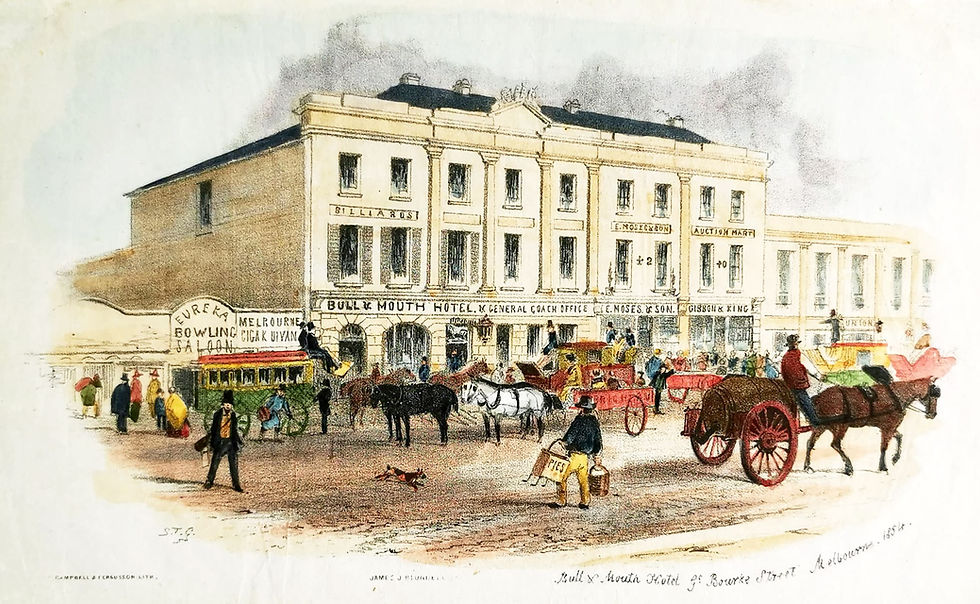
Melbourne's history timeline stretches far beyond the elegant Victorian architecture, bustling laneways, and vibrant arts scene for which the city is known today. Long before European settlers arrived in the nineteenth century, the region was home to the peoples of the Kulin Nation, whose deep connections to the land, waterways, and seasons shaped life in southeastern Australia for tens of thousands of years. Their enduring cultural traditions and stewardship laid the foundations of the landscape that would eventually become Melbourne.
Since its establishment in 1835, Melbourne has undergone a remarkable transformation. What began as a small colonial settlement on the banks of the Yarra River quickly evolved into one of the wealthiest cities in the British Empire during the Victorian gold rush. Waves of migration, economic prosperity, political change, and cultural innovation helped shape a city that would become renowned for its architecture, education, sport, and creative industries.
Today, Melbourne is widely regarded as Australia's cultural capital and one of the world's most livable cities. Yet its identity has been forged over centuries through the contributions of Indigenous communities, settlers, migrants, and generations of residents who have left their mark on the city's development. This timeline explores the key events and turning points that transformed Melbourne from the traditional lands of the Kulin Nation into the dynamic and multicultural metropolis that millions call home today.
Content Table
The Kulin Nation

Long before Melbourne emerged as a thriving metropolis, the region surrounding Port Phillip Bay and the Yarra River was home to Aboriginal peoples whose history in southeastern Australia stretches back tens of thousands of years. Archaeological evidence suggests that Indigenous Australians have inhabited the continent for at least 60,000 years, making them part of the world's oldest continuous living cultures. In the area now occupied by Melbourne, life was shaped by the peoples of the Kulin Nation, a confederation of five interconnected language groups: the Wurundjeri, Boonwurrung, Wathaurong (Wadawurrung), Taungurung, and Dja Dja Wurrung.
The land on which central Melbourne stands traditionally belonged to the Wurundjeri people, while the coastal areas surrounding Port Phillip Bay were primarily the Country of the Boonwurrung people. These groups maintained complex social, political, and spiritual relationships that extended across much of present-day Victoria. Far from being isolated communities, the peoples of the Kulin Nation participated in extensive trade networks, ceremonial gatherings, and systems of kinship that connected different clans and neighboring nations.
The Yarra River, known to the Wurundjeri as Birrarung, occupied a central place in daily life. Its waters provided fish and freshwater, while the surrounding grasslands, wetlands, and forests supported an abundance of plants and animals. Seasonal movement allowed communities to sustainably manage resources and adapt to changing environmental conditions. Knowledge of the land was passed down through generations through oral traditions, songs, ceremonies, and stories that reinforced cultural identity and responsibilities to Country.
For the peoples of the Kulin Nation, the land was not viewed as a commodity to be owned but as a living and sacred entity with which people shared reciprocal obligations. Sophisticated land management practices, including the controlled use of fire, helped maintain ecosystems and encourage biodiversity long before European settlement. Recent scholarship has increasingly challenged earlier colonial assumptions by highlighting the complexity and sustainability of Indigenous societies across Australia.
The first recorded European encounters with the Port Phillip region occurred in the early nineteenth century, but for thousands of years before that, the area was a thriving cultural landscape shaped by Indigenous knowledge, traditions, and stewardship. Understanding Melbourne's history therefore requires recognizing that the city's story did not begin with colonial settlement in 1835. Rather, it began with the enduring legacy of the Kulin Nation, whose connection to Country continues to define the region and remains an essential part of Melbourne's identity today.
1835 and the John Batman Treaty

The origins of modern Melbourne can be traced to 1835, a year that marked the beginning of permanent European settlement in the Port Phillip region. Unlike Sydney, which was established as a penal colony by the British government, Melbourne emerged largely through the efforts of private settlers seeking new opportunities for agriculture and commerce. Yet the circumstances surrounding its founding remain deeply intertwined with questions of Indigenous sovereignty and colonial expansion.
In May 1835, Tasmanian grazier and businessman John Batman sailed across Bass Strait on behalf of the Port Phillip Association, a group of settlers eager to acquire grazing land in southeastern Australia. Upon arriving in the region, Batman met with several Wurundjeri elders and negotiated what later became known as the Batman Treaty. According to Batman, the agreement involved the exchange of goods (including blankets, tools, clothing, and other items) in return for access to vast areas of land around present-day Melbourne and Geelong.
The Batman Treaty occupies a unique place in Australian history because it represented one of the few attempts by European settlers to formally negotiate with Aboriginal peoples for land. However, the treaty's legitimacy has long been disputed. There is considerable debate among historians regarding the nature of the agreement and whether the Wurundjeri leaders understood it as a transfer of ownership in the European sense. Indigenous concepts of land stewardship and shared access differed fundamentally from British notions of private property, making genuine mutual understanding unlikely.
Moreover, the British colonial authorities refused to recognize the agreement. Later in 1835, Governor Richard Bourke declared the treaty invalid, arguing that all land in Australia belonged to the Crown under the legal doctrine of terra nullius. This decision established a principle that would underpin Australian land policy for more than 150 years until the landmark Mabo decision of 1992 rejected the doctrine.
Despite the treaty's rejection, European settlement continued to expand. Later in 1835, another group of settlers led by John Pascoe Fawkner established a settlement on the banks of the Yarra River. The location proved highly favorable, offering access to fresh water, fertile land, and a natural route for transportation and trade. Within a few years, the settlement experienced rapid growth as farmers, merchants, and immigrants arrived from across the British Empire.
Although Melbourne was officially named in 1837 after British Prime Minister Lord Melbourne, its foundations had already been laid by the events of 1835. The year marked the beginning of a profound transformation of the Port Phillip region, one that brought economic opportunity and urban development for settlers while also initiating a period of dispossession and upheaval for the Indigenous communities who had inhabited the land for millennia.
Today, the story of Melbourne's founding is increasingly understood not simply as the establishment of a colonial town, but as a complex and contested chapter in Australia's history, reflecting both the ambitions of European settlers and the enduring presence and rights of the First Peoples of the Kulin Nation.
Early Growth and Separation from NSW

In the years following the establishment of European settlement in 1835, Melbourne experienced an extraordinary period of growth. What had begun as a small settlement on the banks of the Yarra River rapidly expanded into a bustling colonial town, attracting farmers, merchants, laborers, and immigrants seeking new opportunities. By the early 1840s, Melbourne had become the administrative and commercial center of the Port Phillip District, although it remained officially part of the colony of New South Wales.
The town's strategic location, fertile hinterland, and growing trade connections contributed to its prosperity. Wool production emerged as the backbone of the regional economy, with vast pastoral stations supplying the booming British textile industry. As wealth flowed into the district, Melbourne developed essential institutions, including banks, churches, schools, newspapers, and government offices. Streets were surveyed, public buildings erected, and the settlement steadily acquired the characteristics of a permanent colonial city.
Rapid population growth, however, brought significant challenges. During the 1840s and early 1850s, waves of immigrants arrived from Britain and other parts of Europe, many of whom struggled to find adequate housing. This shortage gave rise to an area that became known as "Canvas Town," a temporary settlement of tents located south of the Yarra River near present-day South Melbourne. Initially established to accommodate assisted migrants, Canvas Town quickly became overcrowded and developed a reputation for poverty, poor sanitation, and difficult living conditions. Although short-lived, it symbolized both the opportunities and growing pains that accompanied Melbourne's rapid expansion.
As the Port Phillip District continued to prosper, dissatisfaction with administration from distant Sydney increased. Residents argued that their economic interests and local needs were not being adequately represented by the government of New South Wales. Calls for self-government intensified throughout the 1840s, reflecting the district's growing confidence and distinct identity.
These demands were ultimately successful. In 1851, the British Parliament formally separated the Port Phillip District from New South Wales, creating the Colony of Victoria. Melbourne was chosen as the new colony's capital, marking a major turning point in its history. The achievement of separation gave the city greater political autonomy and positioned it to oversee its own economic and social development.
The timing proved especially significant. Only months after Victoria became a separate colony, the discovery of gold would transform Melbourne beyond anything its early settlers could have imagined. What had been a rapidly growing town on the edge of the British Empire was about to enter one of the most remarkable periods of prosperity in its history.
Marvellous Melbourne

Few events transformed Melbourne as dramatically as the Victorian gold rush of the 1850s. Within just a few years, the city evolved from a modest colonial capital into one of the wealthiest and fastest-growing urban centers in the British Empire. The discoveries of gold at sites such as Ballarat and Bendigo in 1851 triggered an influx of migrants from Britain, Europe, North America, and China, setting off one of the greatest population booms in Australian history.
Although the major goldfields lay beyond Melbourne itself, the city became the principal gateway to Victoria's mining districts. Ships carrying thousands of hopeful fortune seekers crowded Port Phillip Bay, while merchants, banks, and transport companies prospered by supplying the rapidly expanding interior. Melbourne's population surged from around 29,000 in 1851 to more than 125,000 by 1861, making it one of the largest cities in the Southern Hemisphere.
The wealth generated by gold transformed the physical and economic landscape of the city. Grand public buildings, wide boulevards, and elegant Victorian architecture began to define Melbourne's appearance. Financial institutions, theaters, libraries, universities, and museums flourished, reflecting both the prosperity and ambitions of the colony. The establishment of institutions such as the University of Melbourne in 1853 and the State Library of Victoria in 1854 symbolized a growing commitment to education, culture, and civic life.
The gold rush also contributed to Melbourne's increasingly diverse society. Immigrants from around the world brought new customs, languages, and traditions, helping shape a cosmopolitan city that differed markedly from many other colonial settlements. At the same time, rapid growth placed considerable strain on housing, sanitation, and infrastructure, forcing authorities to invest heavily in roads, railways, water supply systems, and public services.
By the 1880s, Melbourne had entered an era of extraordinary prosperity. Property speculation, expanding industries, and international trade fueled economic growth, while lavish construction projects earned the city a reputation for grandeur and sophistication. Visitors and journalists began referring to the city as "Marvellous Melbourne," a nickname that captured both its remarkable wealth and its self-confidence. During this period, Melbourne rivaled some of the great cities of Europe and North America in terms of living standards and urban development.
Yet this prosperity was not without its vulnerabilities. Much of the city's growth had been driven by speculative investment, and by the early 1890s Victoria experienced a severe economic depression that brought widespread unemployment and financial hardship. Nevertheless, the decades of the gold rush and Victorian boom had permanently altered Melbourne's trajectory.
By the end of the nineteenth century, Melbourne had established itself as Australia's leading financial and cultural center. The city that emerged from the gold rush era was no longer a frontier settlement but a sophisticated metropolis whose architectural legacy and civic institutions continue to shape its identity today. The title "Marvellous Melbourne" was more than a slogan, it reflected a period that defined the city's character and secured its place among the great cities of the nineteenth century.
The Federation Era
The dawn of the twentieth century marked another important chapter in Melbourne's history. On 1 January 1901, the six self-governing British colonies united to form the Commonwealth of Australia, creating a new nation through a process known as Federation. As the largest and most prosperous city in the country at the time, Melbourne played a central role in this transition and was selected to serve as the seat of the new federal government.
Although Canberra would eventually become Australia's permanent capital, it did not officially assume that role until 1927. In the interim, Melbourne functioned as the nation's first capital city, a distinction that elevated its political importance and further reinforced its status as Australia's leading metropolis. The federal Parliament convened in the Royal Exhibition Building in 1901, where the Duke and Duchess of Cornwall and York formally opened the first Parliament of Australia in May of that year. Two years later, parliamentary proceedings moved to Parliament House in Spring Street, which served as the home of the Commonwealth Parliament for the next twenty-six years.
During this period, Melbourne became the center of Australian political life. Government departments, public servants, diplomats, and visiting dignitaries were concentrated in the city, contributing to its prestige and influence. The presence of national institutions also strengthened Melbourne's economy and enhanced its reputation as the country's intellectual and administrative heart.
The early decades of the twentieth century were characterized by continued urban expansion and modernization. Electric tram networks extended across the suburbs, transforming transportation and encouraging residential growth beyond the city center. New industries emerged, while manufacturing, finance, and commerce continued to underpin Melbourne's prosperity. Grand Edwardian buildings and civic projects reflected the confidence of a city that regarded itself as the natural leader of the young nation.
Melbourne's prominence during the Federation era also coincided with significant social and political developments. Australia introduced a number of progressive reforms by international standards, including the extension of voting rights to women at the federal level in 1902. Labor movements gained influence, and debates surrounding national identity, immigration, and economic policy shaped the direction of the new Commonwealth. Like the rest of Australia, however, these developments existed alongside discriminatory policies, most notably the White Australia Policy, which restricted non-European immigration for much of the twentieth century.
The outbreak of the First World War in 1914 brought profound changes. Thousands of Melburnians enlisted in military service, while the city mobilized resources to support the war effort. The conflict left lasting social and economic consequences and contributed to a growing sense of Australian national identity.
By the end of the Federation era, Melbourne had firmly established itself as one of the great cities of the British Empire. Although the transfer of the national capital to Canberra in 1927 marked the end of its role as Australia's political center, Melbourne's experience as the nation's first capital left an enduring legacy. The institutions, infrastructure, and civic culture developed during these decades helped shape the city's identity and reinforced its reputation as a center of government, commerce, and culture.
The 20th Century

The twentieth century brought profound change to Melbourne, as global conflicts, mass migration, and cultural transformation reshaped the city and reinforced its position as one of Australia's most important urban centers. While the city had entered the new century as the nation's first capital and economic powerhouse, the decades that followed would test its resilience and redefine its identity.
Both World War I and World War II left a lasting impact on Melbourne. Thousands of residents enlisted in military service, while local industries and factories were mobilized to support the war effort. During the Second World War, Melbourne temporarily served as the headquarters of General Douglas MacArthur and Allied command operations in the Southwest Pacific, highlighting the city's strategic importance during one of the most turbulent periods in modern history.
In the decades following the war, Melbourne experienced dramatic demographic and social changes. Large-scale immigration programs encouraged millions of newcomers from Europe, particularly Italy, Greece, and the former Yugoslavia, to settle in Australia. Many made Melbourne their home, bringing with them languages, traditions, cuisines, and customs that would profoundly influence the city's character. Later waves of migration from Asia, the Middle East, and Africa further contributed to Melbourne's emergence as one of the world's most multicultural cities.
A defining moment came in 1956 when Melbourne hosted the Games of the XVI Olympiad, becoming the first city in the Southern Hemisphere to stage the Olympic Games. The event placed Melbourne firmly on the international stage and symbolized Australia's growing confidence in the post-war era. Preparations for the Games accelerated infrastructure development, modernized sporting facilities, and introduced many Australians to television, which had only recently been established in the country. The Olympics also helped project an image of Melbourne as a modern and outward-looking city.
Throughout the second half of the century, Melbourne underwent further economic and cultural transformation. Manufacturing gradually gave way to service industries, education, finance, and technology. Universities expanded, new suburbs emerged, and the city's extensive tram network continued to connect an ever-growing metropolitan population.
At the same time, Melbourne developed a distinctive cultural identity. Its thriving café scene, influenced by European migrants, became a hallmark of daily life. The city earned a reputation for its literary traditions, performing arts, music, architecture, and passion for sport. Institutions such as the National Gallery of Victoria, the Arts Centre Melbourne, and major sporting venues helped establish Melbourne as a center of creativity and entertainment.
By the close of the twentieth century, Melbourne had evolved far beyond its nineteenth-century image as "Marvellous Melbourne." Shaped by war, migration, and cultural exchange, the city had become a diverse and sophisticated metropolis whose identity rested not only on economic prosperity but also on its rich cultural life. These developments laid the foundations for the modern Melbourne that would enter the twenty-first century as Australia's cultural capital and one of the world's most livable cities.
Melbourne History Timeline
Indigenous Melbourne and the Kulin Nation: c. 60,000 BCE – 1835 CE
Colonial Foundation: 1835 – 1851 CE
Gold Rush and Victorian Melbourne: 1851 – 1900 CE
Federation and Australia's First Capital: 1901 – 1918 CE
Interwar Melbourne: 1919 – 1939 CE
World War II and Post-War Growth: 1939 – 1956 CE
Olympic Melbourne and Cultural Evolution: 1956 – 2000 CE
Global Melbourne: 2000 CE – Present
Project The Great Southern Land
by The Museum of Time
4 May 2026


Comments