Sacred Animals of Ancient Egypt: Gods, Symbols, and Animal Mummification

To the ancient Egyptians, the natural world was never separate from the divine. Every sunrise, every flood of the Nile, and every living creature carried a deeper meaning that connected humanity to the gods. While many civilizations admired animals for their strength or usefulness, the Egyptians went much further, they integrated nearly every creature in their environment into their religious beliefs. From graceful cats and soaring falcons to humble scarab beetles and powerful crocodiles, animals became symbols of creation, protection, wisdom, fertility, and even chaos.
It is important to understand that the ancient Egyptians did not believe every animal was itself a god. Instead, they believed certain animals embodied the qualities or earthly manifestations of particular deities. Their behavior, appearance, and role in nature reflected divine powers. A falcon's commanding flight mirrored the sky god Horus, while a crocodile's strength echoed the power of Sobek. By observing nature, the Egyptians believed they could better understand the gods themselves.
This sacred relationship shaped nearly every aspect of Egyptian life. Animals appeared in temple reliefs, religious festivals, royal ceremonies, mythology, and funerary rituals. Some even lived inside temples under the care of priests, while millions were later mummified as offerings to the gods.
Content Table
For the short list of Animals, Check out the Conclusion!
Animals

Among all sacred animals, cats were perhaps the most beloved and famous in our modern society knowledge about Ancient Egypt. Their ability to hunt mice and snakes protected Egyptian homes and grain stores, making them invaluable companions. Over time, they became closely associated with Bastet, the goddess of home, motherhood, fertility, music, and protection. Bastet was often portrayed as either a domestic cat or a woman with a cat's head, symbolizing both gentleness and fierce maternal devotion. Yet the cat also possessed another side. Larger felines, particularly lionesses, represented Sekhmet, the fearsome goddess of war, plague, and healing. Together, these two goddesses reflected the dual nature of felines, nurturing yet capable of incredible power.

The sight of jackals wandering near desert cemeteries inspired another of Egypt's greatest gods. Since these wild animals were often seen around burial grounds, Egyptians associated them with death and the afterlife. Rather than fearing them, they transformed the jackal into Anubis, the guardian of tombs, protector of mummies, and guide of souls during the journey into the next world. Closely related wolves also became symbols of Wepwawet, whose name means "Opener of the Ways." He was believed to clear paths before kings in battle and guide spirits safely through the underworld.

No living animal received greater honor than the sacred bulls. Unlike symbolic representations, certain bulls were believed to be living manifestations of the gods themselves. The most famous was the Apis Bull, considered the earthly form of Ptah. Priests carefully searched for calves bearing unique markings believed to identify the divine animal. Once chosen, the Apis Bull lived within a magnificent temple, receiving luxurious care until its death, when it was mummified and buried with extraordinary ceremony. Similar traditions surrounded the Mnevis Bull, dedicated to Ra, and the Buchis Bull, sacred to Montu. These animals demonstrated that divine power could literally walk among the people.

The sacred cow represented the nurturing side of Egyptian religion. Cows symbolized Hathor, one of Egypt's most beloved goddesses, associated with motherhood, joy, music, beauty, and love. Hathor was often shown with cow horns embracing the solar disk, emphasizing her role as a divine mother. The goddess Isis also shared connections with cows through her maternal role in protecting Horus and nurturing the royal family.
Strong and majestic lions represented royal authority and military strength. The lioness goddess Sekhmet defended both the gods and the pharaoh, while Maahes, another lion-headed deity, embodied courage and justice in battle. Their fierce nature made lions perfect symbols of divine protection.

The powerful ram also occupied a special place within Egyptian religion. Its impressive curved horns represented fertility, creative energy, and strength. Several creator gods adopted the ram as their sacred animal, including Khnum, who was believed to shape human beings upon a potter's wheel before placing them in their mothers' wombs. Amun, king of the gods during the New Kingdom, also appeared with ram horns, while Banebdjedet was worshipped as a ram deity in the Nile Delta.

Many other mammals also held sacred meaning. Baboons greeted the rising sun with loud cries, leading Egyptians to associate them with Thoth, the god of wisdom, writing, and the moon. Dogs were admired for their loyalty, hunting skills, and protective instincts, often appearing in funerary art alongside Anubis. Egyptian mongooses, or ichneumons, became symbols of Ra because they courageously fought venomous snakes, reflecting the eternal battle between light and darkness.

Even less celebrated animals found places within Egyptian belief. Donkeys were linked to Set, representing both endurance and chaos. Gazelles and oryxes appeared in religious offerings and desert rituals, while elegant cheetahs became symbols of royal prestige and speed, occasionally kept by the elite. Tiny shrews, despite their size, were associated with forms of Horus connected to darkness before the coming of light, reminding Egyptians that even the smallest creatures possessed spiritual significance.
Birds
Looking toward the skies, the Egyptians saw another realm filled with sacred life. Birds flew closer to the heavens than any other creature, naturally becoming symbols of divine authority and cosmic order.

The magnificent falcon stood above all others. Its sharp eyesight, swift flight, and commanding presence made it the perfect symbol of Horus, the great sky god and protector of kingship. Nearly every pharaoh identified himself with Horus, believing his authority flowed directly from the god. Another solar deity, Ra-Horakhty, united Horus with the sun god Ra, representing the sun's daily journey across the sky. Falcon imagery decorated temples, royal crowns, statues, and palace walls throughout Egyptian history.

No bird better represented knowledge than the graceful ibis. Its long curved beak and calm behavior made it sacred to Thoth, the divine scribe who governed wisdom, mathematics, science, writing, and the measurement of time itself. Thousands of ibises were raised in temple sanctuaries, and pilgrims often presented mummified ibises as offerings in hopes of gaining knowledge or divine favor.

The majestic vulture held an unexpectedly positive meaning. Although many modern cultures associate vultures with death, the Egyptians admired their protective nature. The vulture became the symbol of Nekhbet, patron goddess of Upper Egypt, who spread her wings over the pharaoh as a sign of maternal protection. The goddess Mut also adopted vulture imagery, reinforcing themes of motherhood and guardianship.

Other birds carried equally fascinating symbolism. Geese were linked to Geb, the earth god, and to ancient creation stories describing the "Great Cackler," a cosmic goose that laid the egg from which creation began. The elegant heron inspired the legendary Bennu bird, a sacred creature associated with creation, renewal, and rebirth that later influenced myths surrounding the phoenix. Meanwhile, swallows appeared in transformation spells within the Book of the Dead, allowing the deceased to assume bird form and move freely between the worlds of the living and the dead.
Whether soaring high above the Nile or nesting among the reeds, birds reminded the ancient Egyptians that the heavens were never far away. Their flight symbolized freedom, divine authority, and the eternal cycle of life, death, and rebirth that stood at the heart of Egyptian belief.
Water Creatures
The Nile River was the lifeblood of ancient Egypt, providing water, fertile soil, transportation, and food. It is therefore no surprise that many of the animals living within its waters became deeply connected to Egyptian religion. Some were admired and worshipped, while others were feared yet still respected for the divine powers they represented.

Among the most recognizable was the crocodile, the sacred animal of Sobek, god of the Nile, fertility, military strength, and royal power. Crocodiles inspired both awe and fear. They could remain motionless for hours before striking with incredible speed, making them symbols of power and unpredictability. Rather than viewing this strength as purely dangerous, the Egyptians believed Sobek protected the Nile and ensured its life-giving floods. Temples dedicated to Sobek often kept living crocodiles in sacred pools, decorating them with jewelry and precious ornaments. When these animals died, they were carefully mummified and buried with great honor.

The enormous hippopotamus carried two very different meanings depending on its sex. Male hippos, known for their aggressive behavior, often represented Set, the god of chaos, storms, and disorder. Their destructive nature made them symbols of danger that threatened both people and crops. Female hippos, however, inspired one of Egypt's most beloved protective deities, Taweret. Usually shown as a pregnant hippopotamus standing upright, Taweret watched over expectant mothers, protected childbirth, and guarded infants against evil spirits. Amulets depicting her were commonly placed in homes, demonstrating how one of nature's fiercest animals could also become a symbol of maternal care.

Several species of fish also played important roles in Egyptian mythology. The Oxyrhynchus fish became sacred through the myth of Osiris, as some traditions claimed it consumed a part of the god's dismembered body after Set scattered his remains into the Nile. Other species, including the Lepidotus fish and the Nile perch, were worshipped in regional temples and represented abundance, renewal, and the river's generosity. Although not every fish was considered sacred, certain species became important enough to receive offerings and religious devotion.

Even humble frogs carried divine significance. Following the annual flooding of the Nile, countless frogs emerged from the newly formed wetlands, making them natural symbols of fertility, renewal, and new life. They became associated with Heqet, the goddess of childbirth, who was believed to breathe life into newborn children. Women often wore amulets of Heqet while hoping for safe pregnancies and healthy births.

Less celebrated but still meaningful were turtles. Ancient Egyptian texts sometimes portrayed turtles as creatures connected to the underworld or forces of chaos. Despite this negative symbolism, they also possessed ritual importance, and magical texts occasionally invoked turtles for protective purposes. Like many Egyptian symbols, their meaning depended upon the religious context in which they appeared.
Insects & Small Creatures
Some of the smallest creatures in Egypt carried the greatest spiritual importance!

The scarab beetle became one of the most iconic symbols of ancient Egypt. Watching scarabs roll balls of dung across the ground reminded the Egyptians of the sun moving across the heavens each day. This observation led them to connect the beetle with Khepri, the god of the rising sun, creation, and transformation. Just as the sun was reborn every morning, the scarab represented continual renewal and the promise of new beginnings. Scarab-shaped amulets became some of the most popular objects in Egypt, worn for protection and placed among the wrappings of mummies to ensure rebirth in the afterlife.

Cobras inspired both fear and admiration. The sacred Uraeus cobra represented Wadjet, the protective goddess of Lower Egypt. Images of the rearing cobra adorned the crowns of pharaohs, symbolizing divine authority and the goddess's constant protection. Egyptians believed the Uraeus could spit fire at the king's enemies, defending both the ruler and the kingdom. Other serpents also held sacred meanings, particularly Nehebkau, an ancient serpent deity associated with life force, protection, and cosmic order.

The dangerous scorpion was transformed into a symbol of healing through Serket, the goddess who protected people from venomous creatures. Although scorpion stings could be deadly, Egyptians believed Serket possessed the power to both inflict and cure poison. Her priests and priestesses were often connected with healing rituals, and magical spells frequently called upon her protection against venomous bites.

Even creatures that seem insignificant today held ritual importance. Lizards were sometimes mummified and placed inside small bronze containers as offerings during the Late Period. Shrews continued to symbolize darkness and transition, while flies represented extraordinary determination.
Their relentless persistence inspired one of ancient Egypt's most unusual military honors: the Order of the Golden Fly, a decoration awarded to soldiers who demonstrated exceptional bravery and endurance in battle.
Temple Life and Animal Mummification
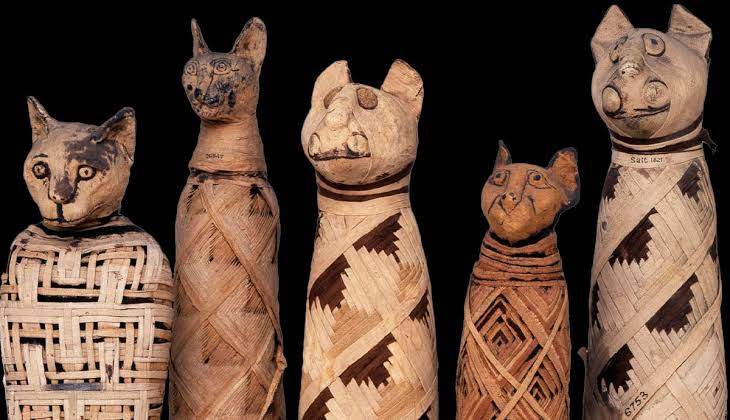
Across Egypt, temples cared for living animals believed to embody the earthly presence of a particular god. Priests selected these creatures according to strict religious traditions, searching for unique markings that identified them as divine. Once chosen, they were treated with remarkable care. They received the finest food, clean living quarters, ceremonial processions, and daily rituals much like those performed for the gods themselves. The famous Apis Bull, for example, was honored throughout its lifetime as the living manifestation of Ptah before receiving an elaborate royal burial after death.
Beyond these rare living embodiments of the gods, millions of animals were mummified as votive offerings. Pilgrims visiting temples often purchased a mummified animal before presenting it to a deity as an act of devotion. A person seeking wisdom might dedicate a mummified ibis to Thoth, while someone praying for protection during childbirth could offer a frog or cat connected to the appropriate goddess. In this way, animal mummies became physical prayers carried directly to the divine.
Modern archaeology has revealed the enormous scale of this practice. Vast underground catacombs at sites such as Saqqara, Tuna el-Gebel, and other sacred necropolises have yielded millions of mummified animals, including cats, ibises, crocodiles, dogs, falcons, scarabs, snakes, and even fish. Some were carefully wrapped in intricate linen patterns, while others rested inside beautifully decorated wooden coffins or bronze containers.
Not every animal mummy represented a beloved temple companion. Many animals were specifically bred for religious offerings, illustrating how deeply animal worship had become woven into Egypt's spiritual and economic life. These discoveries reveal that devotion to sacred animals was not limited to priests or royalty, it was a practice shared by ordinary Egyptians seeking blessings, healing, protection, or guidance from the gods.
Conclusion of Sacred Animals of Ancient Egypt
The sacred animals of ancient Egypt reveal just how deeply religion and nature were intertwined. Rather than viewing animals as ordinary creatures, the Egyptians believed each possessed qualities that reflected the powers of the gods. This belief transformed the landscapes of Egypt into a living sacred world, where every encounter with nature carried spiritual meaning.
Across the land, mammals symbolized some of the most beloved deities. Cats represented Bastet's protection and Sekhmet's fierce power, jackals guided the dead through Anubis, bulls embodied living gods such as Apis, cows reflected the nurturing nature of Hathor and Isis, while lions, rams, baboons, dogs, mongooses, cheetahs, gazelles, donkeys, and even tiny shrews all found places within Egypt's complex religious traditions.
The skies belonged to sacred birds. Falcons soared as the symbol of Horus and divine kingship, ibises represented the wisdom of Thoth, vultures protected Egypt through Nekhbet and Mut, while geese, herons, and swallows became part of ancient creation myths, rebirth traditions, and funerary beliefs.
Within the Nile, crocodiles honored Sobek, hippopotamuses represented both the chaos of Set and the maternal protection of Taweret, frogs symbolized new life through Heqet, sacred fish appeared in the mythology of Osiris, and even turtles carried magical significance in religious rituals.
Even Egypt's smallest creatures held extraordinary meaning. Scarab beetles embodied Khepri and the daily rebirth of the sun, cobras guarded the pharaoh as symbols of Wadjet, scorpions reflected the healing power of Serket, while lizards, flies, and other small creatures became symbols of protection, persistence, and devotion.
These sacred animals were not merely artistic symbols carved onto temple walls. They lived in temple sanctuaries, inspired festivals, appeared in myths, and were honored through one of Egypt's most remarkable religious traditions: animal mummification. Millions of carefully prepared animal mummies discovered by archaeologists remind us that these creatures served as messengers between humanity and the divine.
Together, the sacred animals of ancient Egypt demonstrate a civilization that found spiritual meaning in every corner of the natural world. From the mighty bull to the humble scarab, each creature reflected a different aspect of the gods, creating one of history's richest and most fascinating religious traditions.
Project Kemet
by The Museum of Time
26 July 2026


Comments