What Iran Lost After the revolution of 1979: A Cultural Autopsy

The 1979 revolution did not arrive empty-handed. It came wrapped in promises. After the fall of the Pahlavi dynasty, the Islamic Republic of Iran presented itself as salvation, prosperity, justice, free water and electricity, free public transport, an end to corruption, and a moral awakening.
People believed.
So deeply that myths flourished. Some claimed they saw Khomeini’s face on the moon during the darkest nights. His voice reached Iran through radios broadcasting from France, offering hope to a nation exhausted by uncertainty. A movement whose leadership was not even rooted in Iran declared itself the sole guardian of Iran’s future.
The regime’s first acts were symbolic, and symbols matter. The ancient emblems of Iran, the Sun and Lion tied to centuries of identity, were erased. In their place stood a red tulip: blood sanctified in the name of Islam. History was not preserved; it was replaced.
When the Shah left Iran, he wept. He prayed for the country he was forced to abandon. Whatever one’s judgment of him, the aftermath is undeniable. What followed was not renewal, but decades of continuous suffering.
Regret came quickly, not years later, but days. The promises dissolved almost immediately. Economic justice never arrived. Freedom never arrived. Instead came something far darker: the weaponization of religion.
Islam ceased to be a personal faith and became an instrument, used to justify executions, prisons, censorship, and fear. The regime did not protect Islam; it disfigured it, turning belief into punishment in the public mind.
Today, Iranian resources flow beyond the country’s borders, funding influence elsewhere, while inside Iran a young woman can lose her life for a strand of hair. The average monthly salary hovers around 150 dollars (barely enough to survive) while ideology is lavishly financed abroad.
This is not a failure of faith. It is the consequence of turning belief into a state weapon.
What the Islamic Republic destroyed was not only lives and futures, but culture, memory, dignity, and trust. History will not remember this era with reverence, but with reckoning.
Table of Contents
The revolution of 1979: When Hope Turned Into Control
The Iranian Revolution of 1979 did not erupt overnight, and it did not belong to a single ideology. It was the result of accumulated pressure, political repression, uneven economic development, rising inflation, and a growing sense that the state no longer listened. By the late 1970s, dissatisfaction cut across class lines. Students, workers, clerics, intellectuals, and middle-class families all carried different grievances, but they converged on one demand: change.
What they did not share was a clear agreement on what would come next.

Ayatollah Ruhollah Khomeini, exiled first to Iraq and later to France, emerged as a unifying symbol precisely because he was distant. From Neauphle-le-Château, his messages entered Iran through cassette tapes and radio broadcasts. Distance turned him into projection. To secular leftists, he spoke of anti-imperialism. To the religious, he spoke of moral restoration. To the poor, he promised justice and redistribution. He explicitly stated that clerics would not rule, that freedom of expression would be respected, and that the future government would be guided by the will of the people.
The promises were concrete, and public. Free water. Free electricity. Affordable housing. Free public transportation. An economy cleansed of corruption. These were not rumors; they were declared commitments. Religion, at this stage, was framed as ethical guidance, not legal domination.

In February 1979, following months of strikes and mass demonstrations, Mohammad Reza Shah Pahlavi left Iran. He was seriously ill, politically isolated, and under intense international pressure. His departure was presented as temporary, but everyone understood it marked the end of his rule. He left without ordering a military crackdown, believing (rightly or wrongly) that continued violence would fracture the country beyond repair. His exit created not resolution, but a power vacuum.
Power moved fast to fill it.
Within weeks of Khomeini’s return to Iran, parallel structures emerged. Revolutionary Committees (Komitehs) took over neighborhoods. The Islamic Revolutionary Guard Corps (IRGC) was formed to operate outside the traditional military. Revolutionary courts began issuing rapid trials and executions, often without due process. These developments did not happen in secret; they happened while the language of “people’s revolution” was still being used.
In March 1979, a national referendum asked Iranians a single question: Islamic Republic, yes or no. No alternative models. No constitutional draft. No debate period. The result was announced as overwhelmingly affirmative. For many, it was the first moment unease surfaced: a revolution that had begun plural was now demanding a singular answer.
That singularity hardened quickly.
Newspapers were shut down. Political parties were restricted or dissolved. Former revolutionary allies (especially leftist and secular groups) were labeled counter-revolutionary. Women were among the first to feel the shift. Only weeks after the revolution, mandatory hijab policies were introduced in government offices, triggering protests that were dismissed as Westernized resistance.

Symbols followed ideology. The Lion and Sun (شیر و خورشید), tied to centuries of Iranian statehood, were removed. National identity was rewritten through religious symbolism. History was reinterpreted, not expanded.
By the end of 1979, the promise of freedom had been structurally reversed. Power no longer flowed upward from the people; it flowed downward through religious authority. Loyalty replaced citizenship. Faith was no longer personal, it became compulsory.
The tragedy is not what people hoped. Hope was rational. The tragedy is that hope was used as a transition tool, from participation to control.
What happened in 1979 was not the victory of belief over tyranny. It was the replacement of one centralized power with another, this time armored in the language of the sacred, and therefore far harder to question.
Culture Put on Trial
After 1979, culture was no longer a living expression of Iranian society. It became a suspect. Something to be interrogated, corrected, purified, or eliminated.
The Islamic Republic did not merely change laws; it redefined legitimacy itself. Art, literature, music, cinema, education, even language were placed under ideological surveillance. Culture was no longer measured by creativity or historical continuity, but by loyalty. Anything that did not serve the new moral order was deemed corrupt, Western, decadent, or dangerous.
One of the first targets was artistic freedom. Music was restricted almost immediately. Entire genres disappeared from public life. Concerts were banned, instruments were silenced, and musicians were forced into exile or underground existence. What survived did so only after being stripped of emotion, rhythm, and individuality. Joy itself became suspicious.
Cinema followed. Filmmakers faced strict censorship codes regulating everything from plot structure to camera angles. Physical proximity, women’s voices, women’s bodies, even women’s presence on screen were tightly controlled. Iranian cinema did not disappear, but it was forced to speak in metaphor, coded language, and silence. Creativity survived only by learning how to hide.
Literature and publishing were no safer. Books were banned, libraries purged, translations blocked. Writers were monitored, interrogated, and pressured to self-censor. Certain words became dangerous. Certain ideas became crimes. Intellectual life narrowed, not because Iranians lacked thought, but because thought carried consequences.
Universities (once centers of debate) were placed under direct ideological control. During the so-called Cultural Revolution of the early 1980s, campuses were shut down, faculty members dismissed, curricula rewritten, and students filtered for ideological conformity. Knowledge itself was re-engineered to serve doctrine.
History, too, was put on trial.
Pre-Islamic Iran was minimized, distorted, or framed as morally inferior. Symbols tied to Iranian continuity (the Sun and Lion, national rituals and festivals, cultural memory) were removed or rebranded. The past was not studied; it was edited. What could not be reshaped was erased.
Women’s cultural presence was among the most aggressively targeted. Their voices were restricted from public performance. Their images were regulated. Their participation in art, theater, and media became conditional. Visibility itself became an offense. Half of society was reduced to a moral problem that needed management.
What replaced culture was not spirituality, it was control!
Culture thrives on plurality, contradiction, curiosity, and risk. The Islamic Republic demanded uniformity, obedience, and silence. The result was not moral clarity, but cultural anemia. A civilization thousands of years old was forced into ideological confinement.
And yet (despite everything) culture did not die. It went underground. It hid in private homes, whispered through poetry, encoded itself in metaphor, and survived in exile. Iranian culture endured not because of the state, but in defiance of it.
Putting culture on trial did not make Iran purer. It made it quieter. And silence, in a civilization built on expression, is a form of violence.
Women Erased from Public Life
The Islamic Republic did not marginalize women by accident. It did so by design. From the earliest months after 1979, women’s bodies, voices, and presence became ideological battlegrounds. Law after law redefined women not as citizens, but as moral liabilities, subjects to be controlled for the sake of the state’s religious narrative.
Resistance was met with punishment.
Some women were silenced quietly, through bans, dismissals, forced veiling, and social exclusion. Others were silenced violently.

One of the earliest and most symbolic cases was Farrokhroo Parsa, Iran’s first female Minister of Education. A physician, educator, and advocate for girls’ schooling, she represented the very idea of women in public leadership. In 1980, she was arrested, tried by a revolutionary court, and executed. Her crime was not corruption or violence, but visibility. Her execution sent a clear message: the previous generation of women leaders would not be allowed to exist.
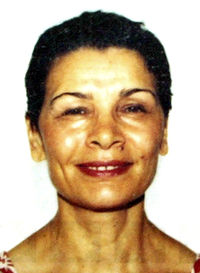
Women in journalism and intellectual life were next. Zahra Kazemi, an Iranian-Canadian photojournalist, was arrested in 2003 while photographing outside Evin Prison. Days later, she died in custody. Iranian authorities offered shifting explanations. Independent investigations pointed to torture. Her death exposed how dangerous documentation itself had become.
Public protest turned deadly as well.

In 2009, during the Green Movement, Neda Agha-Soltan was shot and killed during demonstrations in Tehran. Her death was captured on camera and spread across the world. She did not lead a party. She did not carry a weapon. She became a symbol because the state killed her in public, in daylight, and denied responsibility.

More than a decade later, history repeated itself. In 2022, Mahsa (Jina) Amini, a 22-year-old Kurdish woman, died in custody after being arrested by the morality police over compulsory hijab regulations. Her death ignited nationwide protests led largely by women. Once again, the state responded with force.
Many women were not executed, but were buried alive inside the system.

Zeynab Jalalian, a Kurdish activist, has spent years in prison under harsh conditions, suffering severe health deterioration after being denied medical care.

Nasrin Sotoudeh, a human rights lawyer who defended women protesting compulsory hijab, was imprisoned, repeatedly harassed, and sentenced under national security charges.

Golrokh Ebrahimi Iraee, a writer, was jailed for an unpublished story deemed “ideological crime.”
These women differ in background, ideology, and generation. What unites them is not rebellion, but refusal to disappear.
The Islamic Republic did not simply restrict women. It punished presence. It criminalized voice. It made examples out of bodies.
This was not about morality. It was about control.
And yet, despite executions, prisons, and graves, Iranian women did not vanish. They became the clearest proof of the regime’s failure: that after decades of repression, the most enduring resistance still speaks in a woman’s voice.
Fear as Policy
From its earliest days, the Islamic Republic understood one thing clearly: if it controlled fear, it could control the future. Repression was not a reaction, it was policy.
In the months following 1979, revolutionary courts began operating at alarming speed. Trials lasted minutes. Defendants were often denied lawyers, evidence, or even a clear explanation of their charges. “Counter-revolutionary,” “enemy of God,” or “corrupt on earth” became elastic accusations, capable of fitting students, journalists, activists, artists, and ordinary citizens alike. Prison was not reserved for crime; it was used to discipline thought.
The scale was vast.
Exact numbers are impossible to verify because the state never allowed transparency. Human rights organizations, survivor accounts, and leaked records, however, all point to the same reality: hundreds of thousands of Iranians have been detained since 1979. Some for weeks, some for years. Many without formal charges. Many without trials. Many whose families were never officially informed.
Universities were among the first and most strategic targets.
In the early 1980s, the regime initiated what it called the Cultural Revolution. Universities across Iran were shut down for nearly three years. Campuses were purged. Thousands of professors were dismissed for ideological reasons. Tens of thousands of students were expelled or banned from continuing their education, not for violence, but for political beliefs, religious identity, or association with opposition groups. Being secular, leftist, Bahá’í, Kurdish, or simply critical of clerical rule was enough to end an academic future.
Education was redefined as ideological compliance.
When universities reopened, they did so under surveillance. Student organizations were monitored. Intelligence units embedded themselves into campus life. Informants replaced debate. Academic merit was increasingly subordinated to loyalty. The message was clear: knowledge was acceptable only when it did not question power.
This pattern repeated itself across generations.
In 1999, student protests demanding press freedom were met with mass arrests and violent raids on dormitories. In 2009, following the disputed presidential election, thousands of students and young activists were detained. Many were subjected to prolonged solitary confinement, psychological pressure, and forced confessions broadcast on state television.
In 2019 and again in 2022, repression reached another scale. Universities were stormed. Dormitories were entered by force. Students disappeared into detention centers. According to various reports, tens of thousands of people were detained during the 2022 protests alone, a significant portion of them students and young adults under 25. Many were later expelled, suspended, or barred from education entirely.
Prison became an extension of education policy.

Facilities such as Evin Prison, Gohardasht, and countless regional detention centers evolved into instruments of ideological enforcement. Detention was not only about punishment, it was about breaking continuity. Interrupting studies. Destroying futures. Teaching fear early.
What made this system particularly effective was its predictability. Every generation of students grew up knowing someone who had been arrested. Fear became inherited knowledge. Silence became survival.
And yet, despite decades of imprisonment, expulsions, and intimidation, the strategy never fully succeeded.
Students continued to protest. Universities remained restless. New names replaced old ones. The state filled its prisons again and again, but it never managed to empty the classrooms of dissent entirely.
That is the quiet truth beneath the terror: fear was institutionalized, but it was never complete.
And a system that must continuously imprison its youth is not stable, it is afraid of them.
By the mid-2020s, the logic of repression no longer stopped at Iranian citizenship. It spilled outward.
In 2024 and 2025, Iranian authorities intensified the detention and forced removal of Afghan migrants and refugees, many of whom had lived in Iran for years, even decades. Some were born in Iran. Many had worked in construction, agriculture, factories, and domestic labor, jobs essential to the economy and often avoided by others. Yet when economic pressure increased and public frustration grew, Afghans became convenient scapegoats.
Security forces carried out raids in neighborhoods, workplaces, and even schools. People were stopped on the streets and asked for documents they were often never given the legal means to obtain. Families were separated. Students were pulled out of classrooms. Workers were detained mid-shift. Many were transferred to detention centers and then deported with little notice, no legal process, and no opportunity to collect belongings or wages.
Official language framed these actions as “law enforcement” or “regulation.” The reality was collective punishment.
Reports from human rights groups and Afghan community networks described mass expulsions, overcrowded holding facilities, and deportations carried out under coercive conditions. Some individuals were returned to Afghanistan despite clear risks to their safety, including women, ethnic minorities, and those with no remaining family ties across the border.
This was not an isolated policy failure, it was an extension of a familiar pattern.
The same system that criminalized Iranian students for their thoughts, imprisoned women for visibility, and silenced culture through fear applied the same logic to non-citizens: dehumanize first, remove rights next, then erase presence entirely.
Afghans were not expelled because they were dangerous. They were expelled because they were defenseless.
Their treatment exposed something fundamental about the state’s operating logic. When a government normalizes fear internally, it eventually seeks external targets. Repression does not remain contained, it searches for new bodies.
By 2025, the message was unmistakable: belonging in Iran was conditional, reversible, and enforced through force.
This chapter in particular shattered the regime’s moral claims. A state that speaks endlessly of Islamic unity and justice showed, in practice, how quickly solidarity collapses when power feels threatened. The deportations were not just an immigration policy, they were another demonstration of how control is maintained by dividing the vulnerable and disciplining the visible.
Fear, once institutionalized, does not ask who deserves it. It only asks who can absorb it next.
Art, Music, and Thought Under Surveillance
In the Islamic Republic, repression did not rely solely on prisons and courts. It extended into something far more intimate: imagination. Art, music, and independent thought were not merely regulated, they were monitored, censored, and weaponized to enforce obedience.
From the earliest months after 1979, creative expression was treated as a political threat. The state did not ask whether art was valuable, it asked whether it was useful to the regime. Anything outside ideological control was suspect, dangerous, or corrupting.
Music was the first to feel the clamp. Entire genres were banned. Instruments vanished from public spaces. Singing by women was outlawed entirely. Even men’s music was allowed only if it promoted morality or revolutionary ideals. Joy, love, personal expression, all became subversive. Musicians either fled, hid underground, or performed in private basements, where their music survived only as whispers.
Cinema, once vibrant and internationally recognized, was placed under exhaustive censorship. Scripts required multiple approvals. Completed films were scrutinized again. Every element, dialogue, gestures, intimacy, camera angles, was policed. Women’s hair, voices, and bodies were tightly controlled. Female characters were silenced or hidden. Women’s singing on screen was forbidden. Love, desire, or individuality were criminalized; allegory and metaphor replaced reality. Iranian filmmakers became masters of indirect storytelling, but this brilliance was born from suffocation, not freedom.
Literature and publishing fared no better. Books disappeared from shelves, manuscripts were rejected or forcibly rewritten, and translations were blocked. Writers learned that certain words or themes invited interrogation, arrest, or closure of publishing houses. Self-censorship became a survival tactic.
Even thought itself became dangerous. Universities were placed under ideological surveillance. Lectures were monitored. Student publications were shuttered. Professors were dismissed for deviation. Discussion of history, politics, or society had to conform to the regime’s narrative, or risk punishment.
Most chillingly, women’s voices were erased from public life. Female singers, actresses, speakers, and performers were banned from public spaces. Female students and professors faced restrictions on speech and presence. Their participation in art, academia, or media became conditional, scrutinized, and policed. A woman singing, speaking, or performing was treated as a moral threat, a visible sign that the state did not fully control its people.
Yet, despite decades of pressure, Iranian creativity survived, fragmented, coded, underground, or in exile. Artists, musicians, writers, and thinkers continued to create not because the regime allowed it, but because expression is the lifeblood of a living culture.
The state did not suppress art to protect morality. It suppressed art to enforce fear.
In Iran, after 1979, art, music, thought (and especially women’s voices) were never free. They were allowed only conditionally, temporarily, and under constant surveillance. A society that must ask permission to think is already on trial.
Exile, Execution, and the Emptying of a Nation
The Islamic Republic did not merely govern Iran; it reshaped who could live, think, and thrive within it. And in doing so, it emptied the nation, both figuratively and literally.
From the earliest years after 1979, those who resisted or even questioned the regime faced a choice: conformity, imprisonment, exile, or death. Revolutionary courts, often operating without law or transparency, handed down sentences that were swift and final. Thousands were executed (men and women alike) many for political beliefs, affiliations, or family ties rather than crimes. Among the most emblematic were women leaders like Farrokhroo Parsa, executed for her visibility and advocacy, and countless student activists whose names never reached the public. These acts were not only punishment, they were warnings, signals that dissent would not be tolerated.
Exile became the refuge of the intelligent, creative, and courageous. Intellectuals, artists, academics, and professionals fled. Some left immediately; others waited for opportunities. Entire communities were uprooted. The country lost doctors, engineers, professors, writers, and filmmakers, all essential for societal growth. Neighborhoods, universities, and cultural institutions became hollowed-out versions of themselves. Those who remained lived under constant scrutiny, aware that even minor missteps could result in imprisonment or forced disappearance.
Afghan refugees, long living and contributing in Iran, became the next victims of this system. By 2025, mass deportations stripped families of safety and stability. Students were pulled from classrooms. Workers were expelled mid-shift. People were detained, separated from relatives, and sent back to a country many barely remembered. The message was clear: belonging was conditional, and the state would enforce it without question.
This climate of fear encouraged a brain drain unprecedented in Iranian history. Each exile carried with them knowledge, experience, and culture. Every execution and imprisonment removed another thread from the social fabric. The nation lost its future leaders, its innovators, and its artists. What remained was a society cautious, compliant, and often silent, where potential was subordinated to survival.
Yet, even in exile, Iranian voices continued to rise. Writers, musicians, filmmakers, and scholars kept producing, documenting, and resisting. Their work reached across borders, reminding the world (and the people inside Iran) that the nation was not dead, only constrained.
By emptying its brightest minds and silencing its streets, the Islamic Republic revealed the cost of its ideology: a country physically and mentally hollowed, culturally constrained, and perpetually under the shadow of fear.
Fear controlled those inside. Exile carried the future outside. The nation, once vibrant and diverse, became a field of muted voices and lost potential.
The Long Shadow: Living with the Aftermath Today
Decades after 1979, Iran bears the weight of its revolution like a shadow stretching across every street, classroom, and household. Families remember the names of those executed, imprisoned, or forced into exile. Schools teach a version of history where questioning is dangerous. Cultural institutions operate under caution, as if creativity itself must bow to survival.
Economically, life is precarious. Monthly salaries hover around $150, barely enough for food, rent, and basic necessities. Inflation, corruption, and mismanagement have left the public with shrinking opportunities. Young people (students, artists, and professionals) face the same impossible choices their parents once did: conform, leave, or risk punishment. Afghan refugees, once essential to the economy, remain vulnerable, displaced by policies that view their existence as optional.
In late 2025, a new wave of protests erupted across the country, led overwhelmingly by Gen Z. This generation (born after the 1990s, raised in a world of smartphones and social media) has no memory of the promises made by the Islamic Republic, only the consequences. They organized, documented, and mobilized at unprecedented speed. Young women and men filled the streets, challenging not only economic hardship but decades of systemic oppression. Despite state surveillance, censorship, and aggressive crackdowns, they proved that fear cannot stop a generation armed with digital connectivity, courage, and conviction.
Global attention amplified their voices. Tech platforms, social media networks, and international reporting gave Iranian youth tools their parents never had. Figures in tech and media, while not decision-makers inside Iran, created channels that made their reality visible worldwide. Even in exile, Gen Z Iranians used online platforms to organize and inspire those inside, proving that the struggle is both local and global.
The aftermath of decades of repression is still evident in daily life: fear persists, culture remains censored, and voices (especially women’s) are still constrained. Yet the resilience of Gen Z is undeniable. Underground art, clandestine music, independent journalism, and quiet acts of defiance continue, showing that even the harshest shadow cannot fully erase the light of a new generation.
Iran today is a paradox: a nation hollowed by fear and control, yet never fully silenced; a society forced into survival, yet led by a generation determined to reclaim voice, culture, and freedom.
Author’s Note:
Writing this blog was not easy. As an Iranian, born and grown up in Iran, writing these words (telling the truth about decades of fear, silence, and oppression) fills me with pain. Every story, every name, every erased voice is part of my history, part of my people and what we had experienced.
But I write because I believe in change. As a member of Gen Z, I feel the responsibility to carry our nation’s truth forward, to document what was stolen, to make freedom for next generation and to help our community rise. As the Crown Prince said, we are Gen V, (Victory).
This blog is my way of standing with Iran (as an Iranian immigrant, not having the chance to help my people in protesting in streets): remembering the past, exposing the truth, and inspiring the generation that refuses to be silenced.
Author: The Museum of Time, Asal Mirzaei
5 January 2026, latest update

Comments