Safavid Kings: The list of Rulers of the Safavid dynasty (1501–1736)
The Safavid dynasty was founded on 22 December 1501 AD by Shah Ismail I, marking the rise of a powerful Persian Islamic dynasty that would shape the course of Iranian history. Many historians regard the Safavids as the beginning of the modern era of Iran, a period when political power, religion, and culture were woven tightly together under one crown. For nearly two centuries, from 1501 to 1736, the Safavid rulers governed Iran and built one of the most influential empires of the early modern world.
The kings of this dynasty carried the majestic title “Shahanshah of Iran,” meaning “King of Kings.” They were also known as the “Shadow of God,” a title with deep roots in ancient Persian tradition. Before Islam, Persian rulers used it to express the idea that the king ruled on earth with divine guidance. Over time, it was adopted by Muslim monarchs across the region, appearing in the courts of the Abbasid Caliphate, the Ottoman Empire, Safavid Iran, Qajar Iran, and the Alawi rulers of Morocco. In the Safavid court, this title symbolized both sacred and political authority.
A defining feature of the Safavid dynasty was its role in establishing Twelver Shiʿism as the state religion of Iran. Shah Ismail I made Shiʿa Islam the core of the empire’s identity, a decision that not only unified his subjects under a shared faith but also distinguished Iran culturally and politically from its Sunni neighbors. This religious foundation shaped Persian society, law, and governance, and its influence persists in Iran to this day.
At its height, the Safavid Empire stretched far beyond the borders of modern Iran. From 1501 until 1722, with brief restorations between 1729-1736 and later 1750-1773, the dynasty ruled over present-day Iran, Azerbaijan, Bahrain, Armenia, eastern Georgia, and parts of the North Caucasus, Iraq, Kuwait, and Afghanistan, with influence reaching into regions of Turkey, Syria, Pakistan, Turkmenistan, and Uzbekistan.
Under the Safavid shahs, Iran flourished. Cities grew, trade routes expanded, and Persian art, architecture, and culture entered a golden age. The dynasty’s legacy is not just political but deeply cultural and religious, laying the foundation of modern Iran and cementing the country’s identity as a center of Shiʿa Islam and Persian heritage.
Content table
Shah Ismail I Safavi
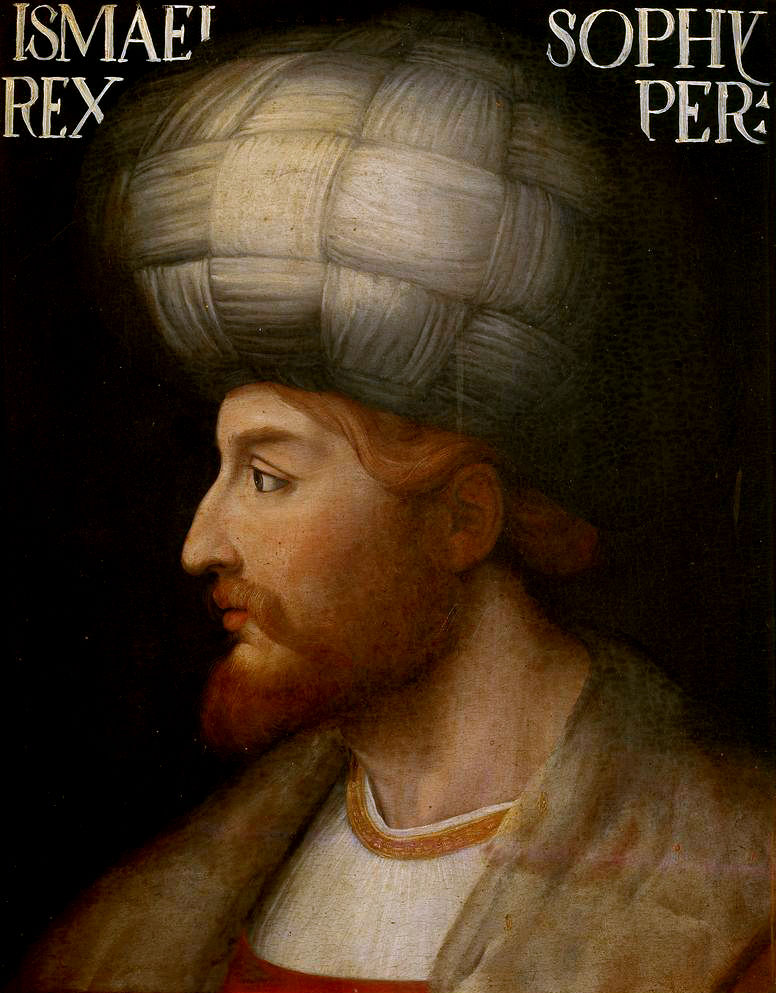
Shah Ismail I, the founder of the Safavid dynasty, was born on 17 July 1487 AD in Ardabil, into a family where spirituality and power were deeply connected. His father was a respected Sufi leader, and his mother came from a strong Turkoman tribal background. Although he was not the eldest son, Ismail grew up learning leadership from his older brother, Sultan Ali Safavi, and from an early age, he showed a rare sense of purpose.
After the death of his brother, Ismail rose as the leader of his followers and transformed what was once a spiritual movement into a powerful military force. In 1501 AD, at a remarkably young age, he captured Tabriz and declared himself Shah of Iran, founding the Safavid Empire. With this, he did not just take a throne, he reshaped a nation. One of his most important decisions was establishing Twelver Shiʿism as the official religion, a move that would define Iran’s identity for centuries.
Ismail was not only a ruler but a charismatic and almost legendary figure in the eyes of his followers. He saw himself as more than a king, blending political authority with spiritual meaning. He claimed mixed heritage, often linked to both Turkic and Kurdish roots, yet what truly defined him was his ability to unite tribes and territories under one vision. Under his leadership, the Safavid state expanded across Iran, Iraq, and beyond, forming the foundation of a strong centralized empire.
However, his story is not only one of victory. In 1514 AD, he faced a crushing defeat at the Battle of Chaldiran against the Ottoman Empire. This moment became a turning point in his life. The confidence and near-mythical image he had built began to fade, and he gradually withdrew from active leadership. In his later years, he is said to have fallen into melancholy and heavy drinking, which weakened both his health and his rule.
Shah Ismail I died on 23 May 1524 AD and was buried in Ardabil. Despite the struggles of his final years, his legacy remains immense. He was the founder of a new Iranian state, a ruler who united land, faith, and power, and a figure whose impact still echoes through the identity of Iran today.
Shah Tahmasp I Safavi
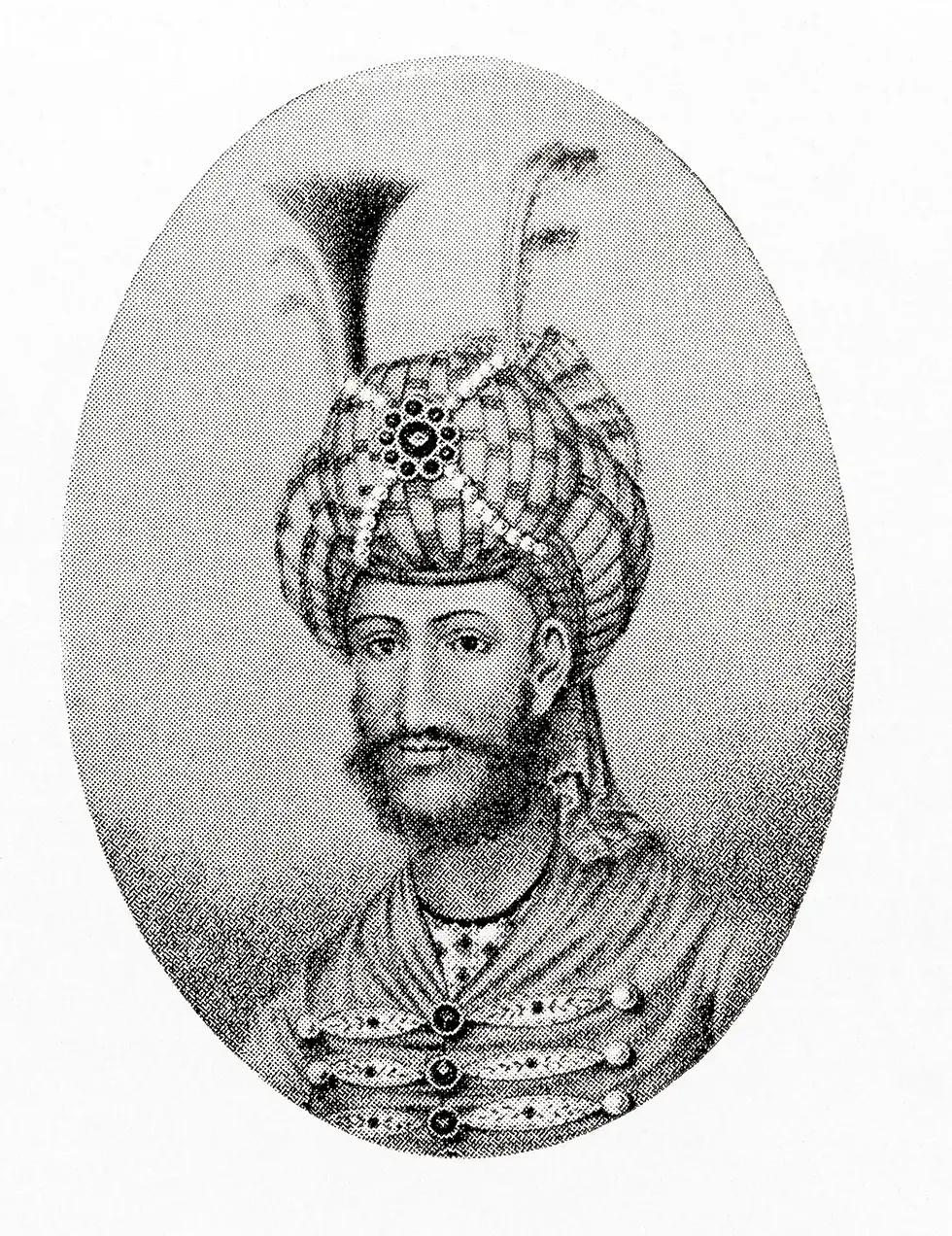
Shah Tahmasp I, the son of Shah Ismail I and Tajlu Khanum, was born on 22 February 1514 AD. He became Shah (king) of Iran on 23 May 1524 AD, at only ten years old, inheriting a kingdom that was still unstable and surrounded by powerful enemies. His early years on the throne were shaped by internal struggles and the influence of those around him, including his sister, Mahin Banu Khanum, who played an important role in guiding the court.
Growing up in the middle of conflict, Tahmasp learned quickly. The Safavid Empire was already at war when he took power, especially with the Ottoman Empire, and he spent much of his reign defending and preserving what his father had built. Unlike Ismail, who expanded the empire through bold conquests, Tahmasp focused more on stability, survival, and control, gradually strengthening royal authority and shaping a more centralized monarchy.
Beyond war and politics, Tahmasp had a quieter but equally important influence. He was deeply interested in art and culture, and under his rule, the Safavid court became a center for poetry, painting, and calligraphy. He himself was known to be a talented painter, and his patronage helped Persian art reach a new level of refinement.
His personal life reflected the political nature of Safavid rule. His chief wife, Sultanum Begum, was the mother of two sons who would later claim the throne. Among his other known wives were Sultan Agha Khanum, often described as his beloved, and Huri Khan Khanum, of Georgian origin. These marriages helped strengthen alliances within the empire.
Shah Tahmasp I died on 14 May 1576 AD (with some sources suggesting 25 May 1576 AD), possibly due to poisoning. After his death, the throne passed to his son, Ismail II.
Tahmasp’s reign may not have been as dramatic as his father’s, but it was essential. He preserved the Safavid Empire during its most fragile years and ensured that it would survive long enough to grow stronger in the future.
Shah Ismail II Safavi

Shah Ismail II, the second son of Shah Tahmasp I and Sultanum Begum, was born on 31 May 1537 AD. He became king of Iran in 1576 AD, following the death of his father, but his reign lasted only about one year, ending with his death on 24 November 1577 AD. His life was marked by turbulence, family conflict, and personal controversy, which would define both his short rule and his complex legacy.
Ismail II spent much of his early life imprisoned in Qahqaheh Castle, under the orders of his father, likely due to a combination of Tahmasp’s paranoia and Ismail’s bold personality. Despite these restrictions, he gained respect among the Qizilbash tribes, partly because of his early military success, including a notable victory in Erzurum.
After ascending the throne, Ismail II quickly consolidated power by having his stepbrother, Haydar Mirza, assassinated with the support of his sister, Pari Khan Khanum, removing the previously chosen heir. His reign was controversial not only for these political moves but also for his personal life. Although born into a Twelver Shia dynasty, he was known to favor Sunni practices and alliances, which put him at odds with the Shia establishment his father had strengthened.
Ismail II’s personal relationships were also unconventional by Safavid standards. He maintained relationships with male companions, which were reportedly an open secret at court. At the same time, he married multiple women, including his chief wife Safieh Soltan Khanum, to satisfy the traditional requirements of the harem and maintain appearances. These aspects of his life contributed to a reputation for divisiveness and scandal, particularly in the eyes of his Shia family and court advisors.
He had two known children, an unnamed daughter and a son, Shoja al-Din Mohammad, who tragically died in infancy shortly after Ismail’s own death. Shah Ismail II died on 24 November 1577 AD, reportedly alongside a close companion. Despite his short reign and the controversies surrounding him, his life illustrates the intense family rivalries, political pressure, and personal complexities that shaped the early Safavid dynasty.
Shah Mohammad Khodabanda Safavi

Shah Mohammad Khodabanda, the eldest son of Shah Tahmasp I and Sultanum Begum, was born in 1532 AD in Tabriz. He became Shah of Iran on 11 February 1578 AD, following the turbulent and brief reign of his younger brother, Ismail II. His rise to the throne was largely due to his survival of Ismail II’s violent purges and the support of the Qizilbash tribes, despite being almost blind, a condition that would shape how he ruled and how others perceived him.
Because of his visual impairment, Mohammad Khodabanda was often seen as weak and incapable of independent leadership. Much of his reign, from 1578 AD to October 1587 AD, was dominated by powerful court figures, particularly his sister Pari Khan Khanum and his chief wife, Khayr al-Nisa Begum, a Persian princess from Mazandaran. Together, they acted as the real power behind the throne, guiding the dynasty and preparing the next generation of Safavid rulers.
Mohammad Khodabanda had at least two known wives, his chief wife Khayr al-Nisa Begum and Farkhunda Begum. He fathered several children, including a daughter and sons Hamza Mirza and Abu Talib Mirza, who were eventually blinded and removed from power by Abbas I, who overthrew him to secure the throne.
Historical accounts often describe Mohammad Khodabanda as a “regal dupe”, a ruler whose weakness allowed others to control the affairs of state. Yet, paradoxically, his reign played a critical role in preserving the dynasty, as the guidance of his sister and wife ultimately ensured that Abbas I could rise to power and restore Safavid strength.
At the end of his life, he spent time in Tabriz, but was eventually banished to Alamut prison, and sources record his death in Qazvin sometime between 21 July 1595 AD and 10 July 1596 AD. He was later buried in Karbala, Iraq. Though his reign lacked the force and ambition of his predecessors, Mohammad Khodabanda’s survival and cooperation with key figures allowed the Safavid dynasty to endure and eventually flourish under Abbas I.
Shah Abbas I Safavi (Abbas The Great of Safavid kings)

Shah Abbas I, often remembered as one of the greatest rulers of the Safavid dynasty, was born on 27 January 1571 AD in Herat (modern-day Afghanistan). He came to power on 1 October 1587 AD, after overthrowing his father, Shah Mohammad Khodabanda, and ruled until his death on 19-20 January 1629 AD in Farahabad. He was later buried in Kashan.
When Abbas took the throne, the Safavid Empire was weak, divided, and under constant threat. But unlike his predecessors, he ruled with strong determination and a clear vision. One of his first major actions was to reduce the power of the Qizilbash tribal leaders, who had long dominated the military and politics. In their place, he built a new army made of ghulams (slave soldiers), musketeers, and artillery units, inspired by the Ottoman system. This change helped him centralize power and strengthen the state.
Abbas is also known for transforming Iran economically and culturally. He moved the capital from Tabriz to Isfahan, turning it into one of the most beautiful and important cities of the time. Under his rule, trade expanded greatly, especially the silk trade, which he developed with the help of Armenian merchants. He also opened connections with European powers such as the English and the Dutch, bringing Iran into a wider global network. Roads, bridges, and caravanserais were built across the empire, making travel and trade safer and more efficient.
His personal life reflected the politics of his time. Abbas had many wives, often through political marriages, including women of Georgian, Circassian, and Turkoman origin, such as Princess Marta of Kakheti. His court was strict and controlled, with the royal harem sometimes described as a “golden cage.”
Despite his greatness, Abbas had a darker side. He was known for his extreme suspicion and paranoia, which led him to execute or blind several of his own sons, fearing they might overthrow him. Because of this, none of his sons succeeded him, and the throne eventually passed to his grandson.
Shah Abbas I died in January 1629 AD, leaving behind a transformed empire. His reign marked the height of Safavid power, shaping Iran politically, economically, and culturally. Even today, places like Bandar Abbas, named in his honor, reflect the lasting impact of his rule.
Shah Safi I Safavi

Shah Safi I, born Sam Mirza in 1611 AD, was the grandson of Shah Abbas I and the son of Mohammad Baqer Mirza and Dilaram Khanum, a Georgian woman. His early life was marked by tragedy, his father was executed when Safi was still a child, leaving him to grow up in the shadow of fear and suspicion within the royal court.
He came to the throne on 28 January 1629 AD, just after the death of his grandfather, and was crowned the next day. Unlike Abbas I, who had strengthened the empire, Safi is often described by historians as cruel, harsh, and passive in leadership. From the beginning of his reign, he focused on securing his power by eliminating potential rivals, including members of his own family. This created an atmosphere of fear within the Safavid court.
Safi had several wives, many of whom came from Circassian and Georgian backgrounds, reflecting the political nature of Safavid marriages. His chief wife, Anna Khanum, was originally a Circassian-Georgian slave who rose to royal status. Among his other wives were Princess Tinatin, likely of Georgian origin, and another Circassian noblewoman. He had five sons and two daughters, though his legacy within the royal family was marked by violence, his eldest son and successor would later blind his own brothers, continuing the cycle of fear and control.
Despite his harsh rule, Safi did achieve some important political results. He brought an end to nearly 140 years of conflict between the Safavids and the Ottomans. Although he lost Baghdad in the peace agreement, he secured control over regions such as eastern Armenia, eastern Georgia, Dagestan, and Shirvan. He also made economic changes by ending the state monopoly over the silk trade, allowing more private merchants to participate in trade within Iran.
However, Safi’s personal life reflected decline rather than strength. He became known for a pleasure-seeking lifestyle, with heavy use of alcohol and other substances, which damaged his health over time. Some sources, including the traveler Adam Olearius, suggest that he may have been poisoned, though this remains uncertain.
Shah Safi I died on 12 May 1642 AD in Kashan and was buried in Qom. His reign is often seen as the beginning of a gradual weakening of Safavid power, where fear replaced strong leadership and the foundations built by Abbas the Great slowly began to erode.
Shah Abbas II Safavi

Shah Abbas II, born Sultan Mohammad Mirza on 30 August 1632 AD in Qazvin, was the son of Shah Safi I and Anna Khanum. He came to the throne on 15 May 1642 AD, still young, following the death of his father. Like many Safavid princes, his early life was shaped by fear and court tradition, and to secure his position, he blinded his male siblings, continuing the harsh Safavid practice of removing rivals.
Despite this brutal beginning, Abbas II grew into a ruler who was often viewed more positively than his father. His reign, lasting until 26 October 1666 AD, is remembered by many Western observers as relatively stable and even prosperous. He was known for having a strong sense of justice and, at times, showed tolerance toward Christian communities, allowing them a degree of freedom within the empire. However, his rule was not without contradiction, there were also periods of religious pressure and persecution, particularly against some Jewish communities, revealing a more complex and sometimes ruthless side of his leadership.
Abbas II achieved important successes for the Safavid state. One of his most notable accomplishments was the recapture of Kandahar, strengthening Safavid control in the east. He also contributed to the architectural beauty of Iran, overseeing projects such as the Khaju Bridge and the completion of the Chehel Sotun Palace in Isfahan, continuing the cultural legacy of his predecessors.
In his personal life, Abbas II followed the traditions of the Safavid court. He had several wives, many of them of Georgian and Circassian origin, with his chief wife being Nakhihat Khanum. Like earlier rulers, he kept his royal family under strict control, even hiding his son and future successor, Suleiman I, so carefully that key figures in the court were unaware of his existence. This reflected the deep fear of rebellion that had shaped the dynasty for generations.
In his later years, Abbas II became increasingly drawn to a pleasure-seeking lifestyle, including heavy drinking, which damaged his health. Historians suggest he suffered from multiple illnesses, possibly including throat disease or cancer. He died on 26 October 1666 AD in Behshahr.
Shah Abbas II is remembered as a ruler of contrasts, just yet harsh, tolerant yet capable of persecution, strong yet shaped by fear. His reign brought a period of relative stability, but the deeper weaknesses of the Safavid system continued to grow beneath the surface.
Shah Suleiman I Safavi

Shah Suleiman I, originally named Sam Mirza, was the son of Shah Abbas II and was born around 1648 AD (exact date uncertain). He came to the throne on 26 October 1666 AD, following the death of his father. Interestingly, he had been kept hidden within the royal harem for much of his early life, so even important figures at court were unaware of his existence until he was chosen as the next King. This unusual upbringing left him with little experience in politics or leadership.
His reign, which lasted until 29 July 1694 AD, is often described as a period of quiet decline for the Safavid Empire. Unlike his grandfather, Abbas I, or even his father, Suleiman showed little interest in active rule. Much of the power during his reign was held by court officials, eunuchs, and royal advisors, while the shah himself remained distant from state affairs.
Suleiman I became known for his luxurious and pleasure-focused lifestyle. He spent much of his time inside the palace, surrounded by the comforts of the court, rather than leading armies or managing the empire directly. Because of this, the central authority of the Safavid state weakened, and corruption and inefficiency slowly grew within the government.
Despite this, his reign was not marked by major wars or sudden collapse. Instead, it was a time of slow internal weakening, where the strength built by earlier rulers gradually faded. Trade and administration continued, but without strong leadership, the empire began to lose its edge.
In his personal life, Suleiman followed Safavid traditions, maintaining a royal harem and forming political marriages, though fewer details about his wives are clearly recorded compared to earlier shahs. Like many rulers of his time, he lived a life of excess, which affected his health in his later years.
Shah Suleiman I died on 29 July 1694 AD, leaving behind an empire that was still standing, but no longer as strong as it once had been. His reign represents a turning point where Safavid power did not fall suddenly, but quietly weakened from within.
Shah Sultan Husayn Safavi
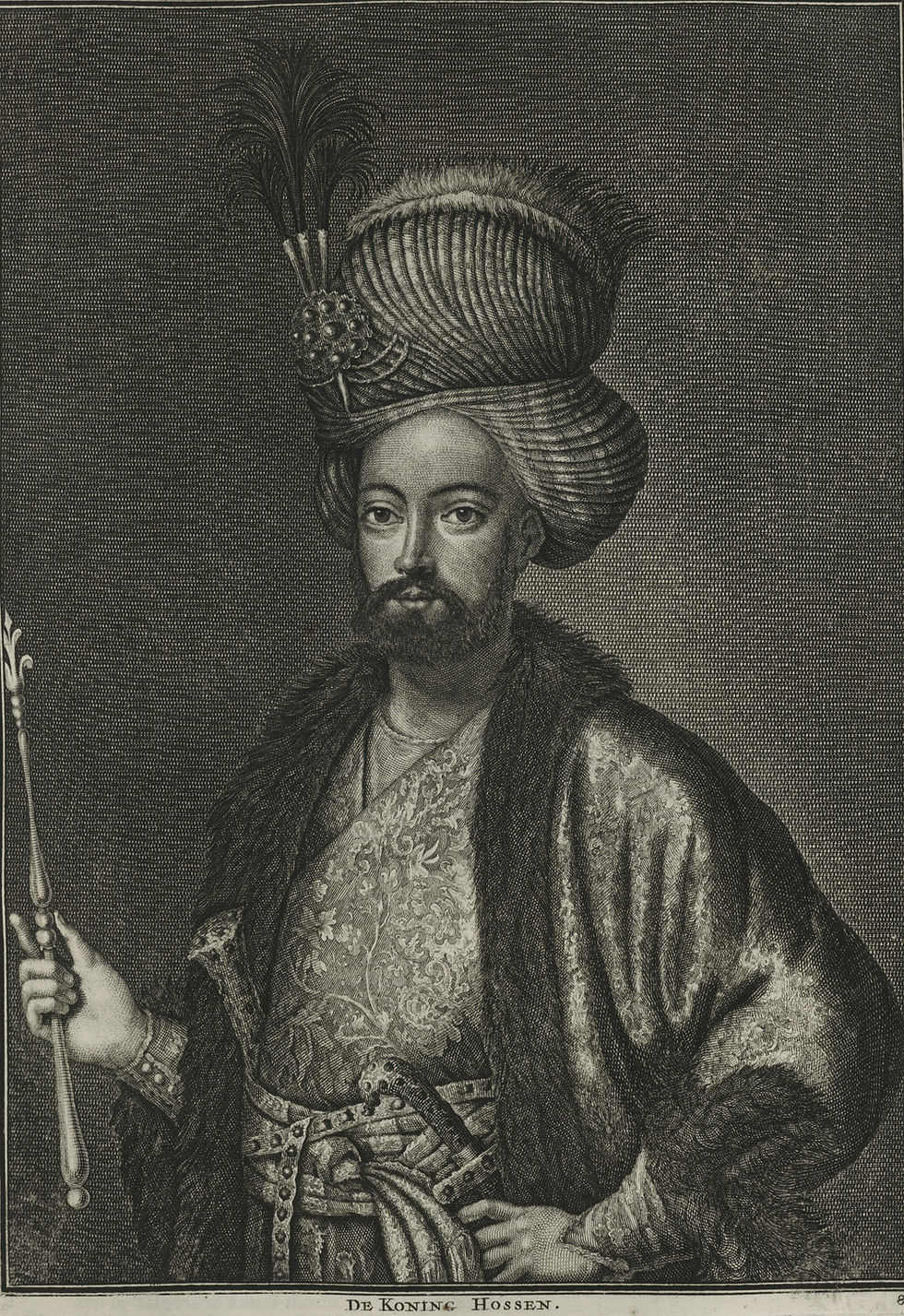
Shah Sultan Husayn, the last major ruler of the Safavid dynasty, was born around 1668, the son of Shah Suleiman I. He came to the throne in 1694 AD, inheriting an empire that still appeared strong on the surface but was already weakened from within.
Unlike the great rulers before him, Sultan Husayn was known for his gentle and religious nature, but also for his lack of political strength and decision-making. He relied heavily on court officials and religious figures, allowing them to influence the direction of the state. While his intentions may have been peaceful, his weak leadership made it difficult to control the growing problems inside the empire.
During his reign, internal tensions increased. His strong support for religious authority led to stricter policies, which created unrest among different groups within the empire. At the same time, corruption, poor administration, and lack of strong military leadership weakened Safavid control even further.
The greatest challenge came from the east. In 1722 AD, Afghan forces led by Mahmud Hotak invaded Iran and laid siege to the capital, Isfahan. The siege lasted for months, bringing famine and suffering to the city. Unable to effectively respond, Sultan Husayn eventually surrendered, marking one of the most dramatic and tragic moments in Safavid history.
After his downfall from power, he remained alive for some time under difficult conditions. He died around 1726 AD, bringing an end to a reign that symbolized the collapse of Safavid authority.
Shah Sultan Husayn is often remembered as a ruler who was kind but not strong enough for the time he lived in. His reign did not suddenly destroy the empire, but it allowed its long-standing weaknesses to finally break it apart. With him, the Safavid dynasty, once powerful and glorious, came to its final downfall.
Shah Tahmasp II Safavi

Shah Tahmasp II, the son of Shah Sultan Husayn, was born around 1704 AD. He rose to power in 1722 AD, during one of the most chaotic and difficult moments in Safavid history. After the downfall of his father and the capture of Isfahan by Afghan forces, Tahmasp did not inherit a stable empire, but rather the remains of a broken kingdom.
Unlike earlier shahs who ruled from strong capitals, Tahmasp II became a shah in exile, trying to reclaim control over Iran while much of it was occupied or divided. His authority was limited, and he depended heavily on military leaders to fight on his behalf. Among them, the most important was Nader Khan Afshar, a rising commander who would later change the fate of Iran entirely.
With Nader’s help, Tahmasp II managed to regain some lost territories and restore parts of Safavid control. However, his rule was unstable and often ineffective. He lacked the strength and leadership needed to fully rebuild the empire, and many decisions weakened his position rather than strengthening it.
One of his biggest mistakes came during a campaign against the Ottomans, where poor leadership led to significant losses. This failure gave Nader Khan the opportunity to step in more directly. In 1732 AD, Nader removed Tahmasp II from power, declaring him unfit to rule.
Tahmasp II spent the rest of his life in captivity, and he died around 1740 AD, far from the power he once claimed. Though he carried the Safavid name, his reign represents a time when the dynasty was no longer in control of its own fate.
Shah Tahmasp II is remembered not as a powerful ruler, but as a symbol of a fallen dynasty trying to rise again, only to be overtaken by stronger forces. His story marks the final phase of Safavid decline, just before a new power would emerge in Iran.
Shah Abbas III Safavi
Shah Abbas III, the last ruler of the Safavid dynasty, was born in 1732 AD, the son of Shah Tahmasp II. He became king of Iran in the same year, when he was only about eight months old, after his father was removed from power. Because of his age, Abbas III never truly ruled, he was a child king, placed on the throne as a symbol while real power was held by others.
During his reign, authority was entirely in the hands of Nader Khan Afshar, the powerful military leader who had already taken control of the Safavid state. Abbas III served mainly as a figurehead, used to maintain the appearance of Safavid legitimacy while Nader ruled behind the scenes.
In 1736 AD, Nader Khan formally removed Abbas III from the throne and declared himself shah, founding a new dynasty. With this, the Safavid dynasty (once one of the greatest empires of the region) came to an official end.
Very little is recorded about Abbas III’s personal life, as he spent his short existence under the control of others. He is believed to have died around 1740 AD, still young, far from power and without ever truly ruling.
Shah Abbas III is not remembered for achievements or decisions, but as a symbol of the final chapter of the Safavid dynasty, a child placed on a fading throne, marking the quiet end of an empire that had once stood strong for over two centuries.
Conclusion
From the rise of Shah Ismail I in 1501 AD to the quiet end under Shah Abbas III, the Safavid dynasty tells a story of power, faith, and change. What began as a bold vision (uniting Iran under one crown and one belief) grew into one of the most influential empires of its time. The Safavid kings did not only rule land; they shaped identity, culture, and religion in ways that still echo in Iran today.
At its height, especially under Shah Abbas I, the empire stood strong, its cities thriving, its trade expanding, and its power respected by both East and West. But like many great dynasties, its strength did not last forever. Over time, internal struggles, court rivalries, and weak leadership slowly weakened the foundations that had once seemed unbreakable.
The later Safavid rulers did not lose everything at once. Instead, the empire faded step by step (through fear, isolation, and loss of control) until even the throne itself became only a symbol. By the time of Abbas III, the Safavid name remained, but the power behind it was gone.
Yet the Safavid dynasty was never just about its fall. It was about transformation. It gave Iran a new political structure, established Shiʿa Islam as a defining identity, and left behind a legacy of art, architecture, and culture that continues to inspire.
In the end, the story of the Safavid kings is not only about rulers and battles, it is about how an empire can rise from belief, reach greatness, and slowly disappear… while still leaving its mark on history forever.
Author: The Museum of Time, Asal Mirzaei
13 March 2026


Comments