Who Was Shams Tabrizi and Why Was He Important to Rumi?
Shams Tabrizi was a 13th-century Persian mystic whose brief but powerful presence transformed the life of Jalal ad-Din Muhammad Rumi. Before meeting Shams, Rumi was a respected scholar and teacher, focused on religious law and intellectual study. He was known for his knowledge, discipline, and calm wisdom, but something essential was still missing in his heart.
When Shams arrived in Konya, he brought with him questions, challenges, and a fiery perspective on spirituality. Their meeting was immediate and intense: Shams encouraged Rumi to look beyond formal knowledge, to experience love, longing, and devotion as paths to the divine. Their conversations, silence, and shared reflections opened a door for Rumi into a world of emotion and mystical insight he had never fully explored.
Shams’ influence sparked Rumi’s poetry, inspiring works that overflow with passion, reflection, and the pursuit of divine truth. The Divan-e Shams-e Tabrizi, Rumi’s collection of poems dedicated to Shams, is filled with longing, devotion, and spiritual symbolism, showing how one extraordinary relationship can ignite a lifetime of creativity.
Even after Shams left Konya, his presence continued to shape Rumi. The absence became a source of inspiration, transforming personal longing into universal wisdom. Through their bond, Rumi discovered that love, challenge, and deep human connection are not only the path to the divine but also the fire that awakens the soul.
In short, Shams Tabrizi was more than a teacher or friend, he was the spark that transformed a scholar into one of the greatest mystical poets in history, showing that a single encounter can change a life forever.
Content Table
Who Was Shams Tabrizi?

Shams Tabrizi was a 13th-century Persian Sufi mystic, spiritual teacher, and wandering dervish whose ideas challenged conventional religious thinking. He is remembered not only for his wisdom, but for his intense personality, independence, and refusal to accept shallow understanding of faith. His full name is often recorded as Shams al-Din Mohammad Tabrizi, meaning “Sun of the Religion from Tabriz.” Like his name suggests, many later writers described him as a powerful intellectual force whose presence illuminated the minds of those around him.
Very little is known with certainty about Shams’ early life, which has added to the mystery surrounding him. He is believed to have been born in the city of Tabriz, an important cultural and intellectual center in medieval Persia. From a young age, he is said to have pursued spiritual knowledge rather than worldly success. Unlike scholars who gained recognition through teaching positions or written works, Shams preferred a life of travel, reflection, and dialogue. He spent years journeying across regions of the Middle East, meeting scholars, mystics, and thinkers in search of meaningful conversation and deeper truth.
Shams was associated with Sufism, a mystical tradition within Islam that emphasizes inner purification, love of the divine, and personal spiritual experience. However, historical accounts suggest that he did not fully attach himself to any single Sufi order. Instead, he followed his own path, often questioning accepted practices and encouraging others to move beyond imitation toward genuine understanding. Because of this, some contemporaries considered him unconventional or even controversial.
Descriptions of Shams portray him as someone who valued honesty and depth over social approval. He is often said to have sought a companion who could truly understand his spiritual perspective. According to later traditions, Shams prayed to find a person capable of engaging with him on a profound intellectual and spiritual level. This search would eventually lead him to meet Jalal ad-Din Muhammad Rumi in the city of Konya, an encounter that would become one of the most famous relationships in the history of literature and mysticism.
Although Shams did not leave many writings behind, his ideas were preserved through the works of Rumi, especially in the poetic collection Divan-e Shams-e Tabrizi, which reflects the deep impact of their connection. Today, Shams of Tabriz is remembered as a symbol of spiritual intensity, intellectual courage, and the transformative power of meaningful companionship.
Who Was Jalal ad-Din Muhammad Rumi Before Meeting Shams?
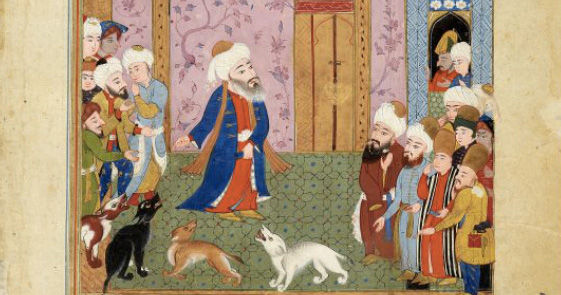
Before meeting Shams Tabrizi, Jalal ad-Din Muhammad Rumi was already a respected scholar, jurist, and religious teacher in the Islamic world. Born in 1207 in Balkh (in present-day Afghanistan), Rumi grew up in a learned family deeply connected to religious scholarship. His father, Baha al-Din Walad, was a well-known theologian, which meant that Rumi was introduced to intellectual and spiritual traditions from an early age.
During his youth, Rumi and his family migrated westward due to political instability in the region, eventually settling in Konya, a major cultural center of the Seljuk Empire. There, Rumi continued his education, studying Islamic law, theology, philosophy, and literature. He became known as a knowledgeable and disciplined thinker, admired by students and respected by the wider community.
By the time he reached adulthood, Rumi had established himself as a teacher and religious authority. He delivered sermons, guided students, and followed the scholarly traditions of his time. His reputation was built on learning, logic, and careful interpretation of religious texts. At this stage in his life, Rumi’s identity was primarily that of a jurist and academic figure rather than a poet of spiritual love.
Although Rumi was deeply spiritual, his expression of faith remained within formal structures of scholarship. Poetry, music, and ecstatic forms of devotion (elements now strongly associated with his legacy) were not yet central to his public life. His transformation into one of the most celebrated mystical poets in history would begin only after his encounter with Shams of Tabriz, whose influence encouraged Rumi to explore spirituality through emotion, symbolism, and artistic expression.
Understanding who Rumi was before meeting Shams helps reveal how significant this encounter truly was. It marks the transition from respected scholar to visionary poet, a shift that would shape the course of Persian literature and Sufi thought for centuries.
How Did Shams Tabrizi and Jalal ad-Din Muhammad Rumi Meet?
The meeting between Shams of Tabriz and Rumi is one of the most famous encounters in the history of spirituality and literature. It is believed to have taken place around the year 1244 in the city of Konya, where Rumi was teaching and living as a respected scholar.
According to traditional accounts, Shams had spent years traveling in search of someone who could understand his spiritual perspective. He is said to have prayed for a companion capable of deep intellectual and mystical conversation. When he arrived in Konya, he encountered Rumi, who was already known for his knowledge and authority as a religious teacher.
One of the most well-known stories describes Shams approaching Rumi and asking a challenging question intended to test his understanding of spiritual truth. Some versions say Shams asked Rumi who was greater, the Prophet Muhammad or the mystic Bayazid Bastami. The question was not meant to create conflict, but to encourage deeper reflection on humility, devotion, and the nature of spiritual experience. This unusual conversation reportedly captured Rumi’s attention and marked the beginning of their connection.
Historical sources differ in the details, but most agree that their meeting quickly developed into a strong intellectual and spiritual bond. Rumi was deeply influenced by Shams’ perspective, which emphasized inner experience over formal knowledge. The two spent long periods in discussion, often withdrawing from public life to focus on reflection and dialogue.
Their close relationship surprised many people in their community, as Rumi began to dedicate more time to spiritual contemplation, poetry, and music. What began as a conversation grew into a transformative companionship that reshaped Rumi’s worldview and later inspired many of his most famous works.
Although the exact details of their first meeting remain partly legendary, its impact is clear: the encounter between Shams and Rumi became a turning point that changed the course of Rumi’s life and helped shape the legacy of Sufi poetry.
Why Was Shams Important to Rumi?
Shams of Tabriz was more than a friend or teacher to Rumi, he was the spark that ignited Rumi’s soul. Before Shams, Rumi was a respected scholar, grounded in religious law and academic study. Shams challenged everything Rumi thought he knew, pushing him beyond structured knowledge into the realm of direct spiritual experience.
Through their conversations and shared silence, Shams taught Rumi to look inward, to embrace love, longing, and divine presence as paths to truth. He encouraged Rumi to question rigid rules, to explore mystical insight, and to express profound emotion, something Rumi had not yet allowed himself to do publicly.
This influence is most evident in Rumi’s Divan-e Shams-e Tabrizi, a collection of poems overflowing with devotion, passion, and reflection. Every verse reflects the depth of their connection, the longing Rumi felt in Shams’ absence, and the transformative power of their bond.
In essence, Shams was the catalyst for Rumi’s evolution from scholar to mystic poet. He opened a door to creativity, spiritual awakening, and emotional honesty that continues to resonate in Rumi’s work centuries later. Without Shams, Rumi might never have become the poet whose words cross cultures, languages, and hearts even today.
The Disappearance of Shams Tabrizi
Shams Tabrizi’s time with Rumi was electric, a storm of ideas, questions, and spiritual insight. Yet, like a comet blazing across the night sky, his presence was brief. After a few intense years, Shams vanished from Konya. The reasons remain part of legend: some say he returned to his wandering path, following the call of the unseen; others suggest he sought silence to deepen his own connection with the divine. Whatever the truth, the effect on Rumi was seismic.
Shams’ absence did not end their story, it transformed it. In the quiet left behind, Rumi discovered a new depth of emotion and devotion. The longing he felt became fuel for some of the most extraordinary poetry in history. In the Divan-e Shams-e Tabrizi, Shams appears simultaneously as teacher, friend, mirror, and symbol, a representation of divine love, the fire of transformation, and the inner light that guides the soul. Every line pulses with the tension between presence and absence, attachment and transcendence.
Through Shams, Rumi learned that true wisdom and spiritual growth often arrive wrapped in challenge and longing. Their bond showed him that love is not just comfort, it is a force that can dismantle the ego, awaken the heart, and open the soul to the infinite. In losing Shams, Rumi gained an entire universe of insight, one that would forever color his words with a luminous intensity.
Even centuries later, the echo of Shams’ influence is unmistakable. Rumi’s poetry, brimming with yearning, joy, and illumination, reminds us that some encounters (brief, mysterious, and profound) can reshape a life forever. The disappearance of Shams was not an ending, but a beginning: the spark that ignited a timeless legacy of love, devotion, and spiritual awakening.
The Influence of Shams on Rumi’s Poetry
Imagine Konya in the 13th century: a city of traders, scholars, and pilgrims, buzzing with the rhythm of life, prayer, and learning. Rumi walked its streets, a respected scholar with calm eyes, a measured voice, and a mind trained in law and theology. Knowledge had been his anchor, tradition his world. He thought he understood what it meant to serve, to teach, to live a life of meaning. And then Shams arrived.
Shams did not announce himself with grandeur. He arrived quietly, carrying nothing but his questions, his gaze, and a mind that refused to settle for the ordinary. From the moment they met, the air around Rumi seemed to shift. The conversations they had were not casual; they were earthquakes in the mind and the heart. Shams asked questions that pulled Rumi into the depths of his own soul. He challenged him to feel, to burn, to love beyond the limits of reason.
Rumi’s poetry became the mirror of this transformation. Where once his words had been precise and formal, now they overflowed with longing, with fire, with music. In the Divan-e Shams-e Tabrizi, every verse feels like a heartbeat, a dialogue with the unseen, a step into a world where love is both the path and the destination. Shams became a living symbol in Rumi’s poems: the friend who awakens, the mirror that reveals, the light that guides toward the infinite.
Through Shams, Rumi discovered that poetry was not just art, it was devotion, prayer, a way to touch the divine. Fire became a metaphor for passion, wine for ecstasy, night for mystery, and absence for longing. Each word he wrote carried the echo of their companionship, the tension between closeness and distance, presence and loss.
Even after Shams left Konya, the fire remained. Rumi walked the city streets differently now, his heart tuned to a new rhythm. Every line of poetry, every verse of longing, every declaration of love and devotion carried Shams’ spirit, a constant reminder that one extraordinary connection can transform a life, and in doing so, transform the world.
Rumi’s words, born from friendship, challenge, and absence, continue to travel across centuries. They remind us that true inspiration often comes from the sparks that enter our lives unexpectedly, the people who see us, challenge us, and ignite the fire we never knew we carried.
The Spiritual Meaning of Their Relationship
The bond between Rumi and Shams was more than friendship, it was a meeting of souls, a collision of hearts and minds that opened a doorway to the infinite. Shams did not just teach Rumi facts or religious rules; he held up a mirror to Rumi’s soul, reflecting both the beauty and the shadows within. In that reflection, Rumi saw the truth he had been searching for all his life: that love, longing, and devotion are the paths to God.
Their relationship shows that true spiritual awakening often comes through connection. Shams challenged Rumi, questioned him, and provoked him, not to harm, but to awaken. In every conversation, every shared silence, Rumi was being pushed to step beyond the familiar, to let go of pride, fear, and attachment, and to embrace the vast, unknowable, and beautiful mystery of existence.
In Sufi tradition, Shams represents the divine spark, the presence that shakes the heart awake. Rumi’s love for him became a symbol of humanity’s yearning for the eternal. The fire, longing, and devotion that pour from Rumi’s poetry are not just for a mortal friend; they are an expression of the soul reaching toward the divine, using the human connection as a bridge.
Even Shams’ disappearance becomes meaningful in this spiritual frame. Absence, longing, and separation are not punishments, they are teachers. They show that love is not possession, that the deepest lessons are often learned in the space between presence and loss. Rumi’s poetry transforms personal grief into universal wisdom, teaching that every profound connection has the power to change our hearts forever.
the relationship between Rumi and Shams is a living metaphor: the soul’s awakening often comes through fire, challenge, and the reflection of another. Their story reminds us that true spiritual growth is never solitary, it is found in the eyes, words, and presence of those who dare to touch the depth of our being.
Author: The Museum of Time, Asal Mirzaei
15 March 2026


Comments