The Faravahar: Meaning, Symbolism, and the Difference Between Far Kiāni & Far Shāhi
Updated: Apr 26

The Faravahar is one of the most recognizable symbols of ancient Iranian culture and Zoroastrianism. Seen in temples, monuments, and historical artwork, it represents more than just decoration, it embodies the spiritual and ethical principles that guided the lives of the ancient Iranians. At its core, the Faravahar reminds us of the importance of morality, personal growth, and the connection between humans and the divine.
Every part of the Faravahar carries meaning: the human figure at the center symbolizes the soul, the wings reflect good thoughts, good words, and good deeds, and the tail feathers represent the opposite, what to avoid in life. The ring in the figure’s hand stands for loyalty and faithfulness, while the side streamers remind us that life is a constant choice between right and wrong.
Understanding the Faravahar also opens a window into Iranian history, especially the concepts of Far Kiāni and Far Shāhi. These ideas of divine and worldly authority shaped how kings were seen and how power was exercised, blending spiritual guidance with practical leadership.
In this blog, we will explore the details of the Faravahar, decode its symbolism, and explain the difference between Far Kiāni and Far Shāhi, helping us appreciate both its spiritual and cultural significance.
Content Table
What is the Faravahar?
The Faravahar is not just a symbol; it’s a bridge between the material and spiritual worlds, a visual language of cosmic law encoded into art. Its origin is deeply tied to Zoroastrian cosmology, where every human is believed to have a Fravashi, a divine, eternal essence that exists beyond birth and death. The Faravahar makes this invisible energy visible, showing the connection between the human soul and Ahura Mazda, the ultimate source of wisdom and order in the universe.
The figure at the center represents the individual soul, but not as a passive entity, it’s an active agent of choice. In Zoroastrian thought, life is a battlefield of moral forces. The Faravahar captures this tension: the wings, divided into three layers, symbolize good thoughts (Humata), good words (Hukhta), and good deeds (Hvarshta), the very tools humans use to elevate themselves spiritually. The tail feathers warn us of the opposite: the habits, words, and thoughts that chain the soul to ignorance and chaos.
The ring in the figure’s hand is more than loyalty, it’s the eternal cycle of existence, a reminder that ethical living is a continuous, never-ending process. The two streamers or ribbons stretching outward represent the duality of existence: light vs. darkness, order vs. chaos, divine guidance vs. human error. This duality is central to Zoroastrianism; it frames life as a series of choices where the soul’s destiny is forged.
Historically, the Faravahar also had political and dynastic weight. Ancient kings were seen as bearers of Far Kiāni, a divine glory that legitimized their right to rule, and Far Shāhi, their worldly power and ability to maintain order. Seen this way, the Faravahar is a cosmic blueprint of governance, a reminder that leadership must balance spiritual insight with earthly responsibility.
In essence, the Faravahar is a cosmic diagram of existence itself: the human soul striving upward, guided by divine principles, making choices that ripple across both spiritual and earthly realms. It’s ethics, philosophy, and political theory all fused into one timeless image.
Symbolism of the Faravahar
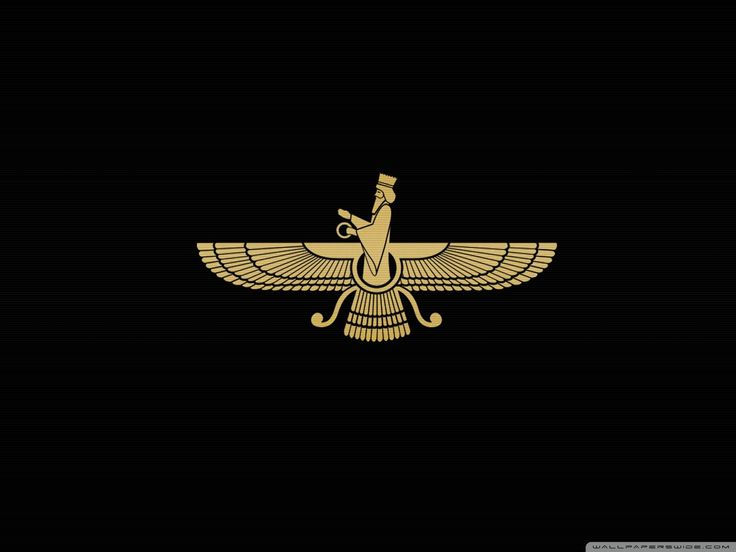
As we said the Faravahar is a masterclass in symbolic storytelling. Every element is intentional, conveying spiritual, ethical, and historical meaning. Here’s the breakdown:
The Human Figure
At the center is a human figure, usually a bearded man with an outstretched hand. This isn’t random, he represents the human soul, capable of thought, choice, and spiritual growth. Some interpretations see the figure as a guide, showing the way to righteousness, while others view it as the soul itself, striving to ascend toward higher truths.
The Ring in the Hand
The figure holds a ring, often seen as a symbol of loyalty, faithfulness, and eternal commitment. In Zoroastrian and royal contexts, it also reflects the eternal cycle of life and governance, reminding rulers and individuals alike that ethical integrity must be constant.
The Wings
The wings are divided into three layers, representing the three pillars of Zoroastrian ethics:
Good Thoughts (Humata)
Good Words (Hukhta)
Good Deeds (Hvarshta)
These are the “engine” of spiritual elevation, the things that push the soul forward toward divine harmony.
The Tail Feathers
The tail mirrors the wings, also in three layers, but these represent what to avoid: bad thoughts, bad words, and bad deeds. They balance the wings, showing that the soul’s ascent depends on rejecting negative impulses as much as embracing positive ones.
The Two Streamers
On either side of the figure, two ribbons or streamers symbolize the duality of life: light and dark, right and wrong, order and chaos. Life constantly presents choices, and the streamers are a visual reminder that every decision affects the soul’s journey.
Circular Base
Some depictions show the figure standing on a circle, which represents the eternal nature of the universe and the continuous cycle of life and spiritual progress. It is also tied to the concept of divine order and cosmic balance.
Connection to Kingship
Beyond spirituality, the Faravahar connects to ancient Iranian rulership. The figure embodies Far Kiāni (divine glory) and Far Shāhi (earthly authority), linking the ideals of moral governance with worldly power. It’s a reminder that leadership must be guided by ethics, not just ambition.
Far Kiāni vs. Far Shāhi: Understanding the Difference
In ancient Iranian thought, the idea of Far was everything. It was the divine energy that gave rulers their right to lead, the invisible force that connected the human world to the spiritual. But this force came in two forms: Far Kiāni and Far Shāhi, and knowing the difference shows how the Iranians understood life, leadership, and morality.
Far Kiāni is the kind of glory that comes from the heavens, from Ahura Mazda himself. It’s the spiritual spark that makes a king not just a ruler but a legitimate one. It’s about having the wisdom, the sense of justice, and the moral authority to guide people. It ties a ruler to the divine order, showing that his right to rule isn’t random or forced, but cosmically sanctioned. (the body is toward left side)
Far Shāhi lives in the world we can touch. It’s the king’s power to lead, to enforce law, protect the people, and expand the empire. It’s the charisma and skill that make people follow, the authority that shows he can actually get things done. Far Shāhi is temporary. You can win battles and govern well, but if your heart and ethics aren’t aligned, it can fade.
The ancient Iranians believed a ruler needed both. A king with Far Kiāni but no Far Shāhi might be wise and just, but powerless. A king with Far Shāhi but no Far Kiāni could command armies and collect taxes, yet his reign would feel hollow, lacking legitimacy. The Faravahar reflects this balance. Its figure represents the soul, the inner guidance of Far Kiāni, while the wings and ring hint at action and earthly responsibility, the qualities of Far Shāhi. (the body is toward right side)
In the end, Far Kiāni and Far Shāhi aren’t just about kings. They’re a guide for anyone striving to align purpose with action, morality with strength, and the inner self with the world around them.
Cultural and Spiritual Significance
The Faravahar is much more than a historical symbol; it’s a bridge between the human and the divine, a reminder of how ancient Iranians understood life, morality, and the soul. It shows up in temples, on tombs, and in art, not just as decoration, but as a constant nudge toward higher values. At its heart, it tells the story of the human soul navigating the choices of life, reminding us to think, speak, and act with goodness.
Spiritually, the Faravahar represents the connection between humans and Ahura Mazda, the divine source of wisdom and order. It’s a visual guide to living ethically, showing that our inner choices shape not only our own path but the world around us. Every feather, every ring, every line has a lesson, teaching that life is a balance of action and conscience.
Culturally, it’s a symbol of identity and continuity. Even after empires fell and centuries passed, Iranians kept the Faravahar alive in architecture, jewelry, and public spaces. It became a symbol of pride, heritage, and resilience, carrying forward the values of justice, courage, and wisdom.
The Faravahar also reminds us that leadership and life are intertwined. Its lessons about Far Kiāni and Far Shāhi aren’t only for kings; they show that anyone can lead their own life with moral integrity and practical wisdom. It’s about connecting the spiritual with the worldly, the eternal with the everyday, and the self with the community.
In short, the Faravahar is a living philosophy, a timeless symbol of ethical guidance, spiritual awareness, and cultural identity, reminding us that every choice matters.
Conclusion
The Faravahar is more than an ancient symbol, it’s a map for life, a reminder of the soul’s journey, and a guide for moral and spiritual growth. Its wings, feathers, and central figure tell us to think well, speak well, and act well, while its circular base and streamers show that life is full of choices, each with consequences.
Through the ideas of Far Kiāni and Far Shāhi, the Faravahar also teaches that true leadership (whether over a kingdom or one’s own life) requires both inner virtue and practical action. It’s a lesson that transcends time: morality without action is powerless, and action without ethics is hollow.
Even today, the Faravahar connects people to their history, culture, and identity. It reminds us that we carry both responsibility and potential, that every decision shapes our path, and that the soul’s journey is eternal. In a single image, it holds ethics, spirituality, and cultural pride, making it one of the most enduring and meaningful symbols of Persian civilization.
The Museum of Time Team
31 March 2026



Comments